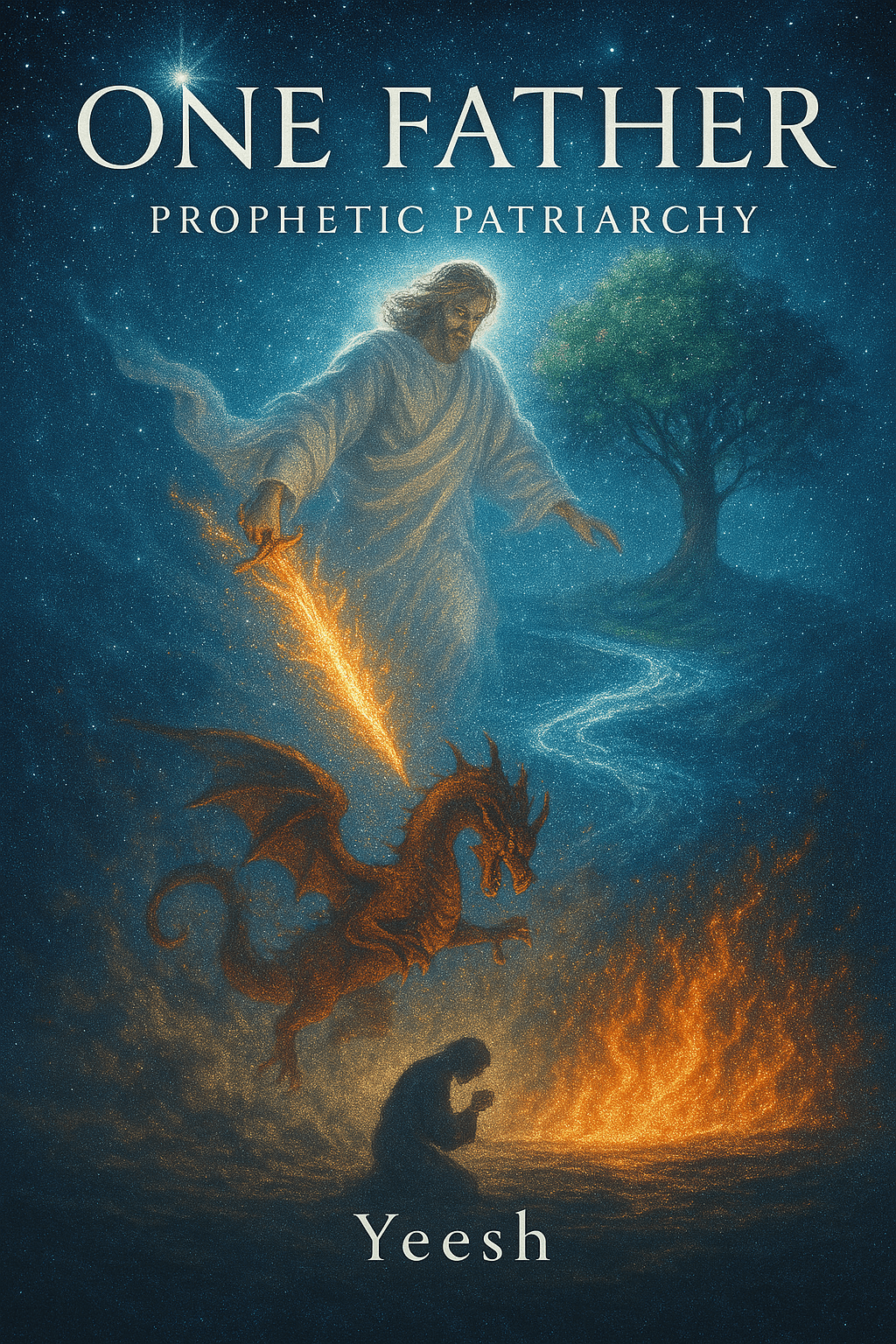
Love as a Binding Headship Invitational
I just like the way the title of this chapter sounds honestly, it paints an open door next to Love and headship and gives it binding authority. It flows through my mind so easily. It is a way of saying that Love is a covenant offering that we can be bound to Him by faith through accepting what He has done on the cross, and because we become His, he abundantly pours out His Spirit on us. So as we move towards conclusion of our exploration of the untold plethora of stories in Genesis 1, 2, and 3, we turn our attention to the profound theme that permeates both the Old and New Testaments. The New Testament, in particular and in plain terms, illuminates how the foundations laid in Genesis find their ultimate expression in the teachings and person of Yeshua Messiah, whom we are to Love first, as we also Love others.
Love The Word, Love Others The New Testament unequivocally declares that Elohim is love. This foundational truth shapes our understanding of all creation and human relationships. "Anyone who does not love does not know Elohim, because Elohim is love." (1 John 4:8) This echoes the harmonious relationships intended in the garden of Eden, where humanity was designed to reflect Elohim's loving nature. Yeshua distilled the entirety of the Law into two paramount commands, reflecting the relational intentions of creation.
Matthew 22:37–39"And he said to him, 'You shall love YHWH your Elohim with all your heart and with all your soul and with all your mind. This is the great and first commandment. And a second is like it: You shall love your neighbor as yourself.'"
These commandments restore the vertical and horizontal relationships fractured by the fall, guiding us back to the original design of communion
with Elohim and harmonious living with others. Yeshua introduced a transformative standard of love, rooted in self-sacrifice and service.
John 13:34–35"A new commandment I give to you, that you love one another: just as I have loved you, you also are to love one another. By this all people will know that you are my disciples, if you have love for one another."
The Apostle Paul provides a profound description of love's attributes, aligning with the virtues humanity was meant to exhibit from the beginning.
1 Corinthians 13:4–7"Love is patient and kind; love does not envy or boast; it is not arrogant or rude. It does not insist on its own way; it is not irritable or resentful; it does not rejoice at wrongdoing, but rejoices with the truth. Love bears all things, believes all things, hopes all things, endures all things."
These qualities counteract the discord introduced by sin, guiding us toward the restoration of the original harmony of creation. The New Testament reveals that Elohim's love is clearly demonstrated through the life, death, and resurrection of Yeshua.
John 3:16"For Elohim so loved the world, that he gave his only Son, that whoever believes in him should not perish but have eternal life."
This act of love offers redemption and the possibility of restored relationship with Elohim, fulfilling the promise hinted at in Genesis 3:15. Paul emphasizes that genuine love naturally leads to the fulfillment of Elohim's commandments, reflecting the intended moral order of creation.
Romans 13:8–10"Owe no one anything, except to love each other, for the one who loves another has fulfilled the law. For the commandments... are summed up in this word: 'You shall love your neighbor as yourself.' Love does no wrong to a neighbor; therefore love is the fulfilling of the law."
This underscores that living in love aligns us with Elohim's original design and purposes. The New Testament envisions a renewed creation where love reigns supreme, restoring what was lost in Eden.
Revelation 21:3–4"Behold, the dwelling place of Elohim is with man. He will dwell with them, and they will be his people... He will wipe away every tear from their eyes, and death shall be no more..."
This consummation reflects the fulfillment of Elohim's loving plan, bringing creation full circle to its intended glory. The circle of the earth. As we reflect on the intricate tapestry woven from Genesis through the New Testament, we recognize that love is the thread that binds it all together. The call to love Elohim and others is not merely a command but an invitation to participate in Yeshua’s mission to restore creation as Elohim intended. May we, empowered by the Spirit, embody this love in all aspects of our lives, hastening the day when Elohim's kingdom is fully realized on earth as it is in heaven.
The Living Word From the very first words of Genesis, we see the seed of the Living Word of Elohim planted - a Word that would spring forth, grow, and bear fruit in every generation, shaping the way Elohim reveals Himself to mankind. These are not just ancient stories, nor are they mere metaphors, but rather, living realities that unfold in time, manifesting exactly as needed in each era so that the greatest number might seek and be saved (Acts 17:26–27). This is the unfolding of love, the tapestry of redemption, woven throughout history. The Word became flesh (John 1:14), but before He did, He was already growing in the fabric of every story, every pattern, every root structure laid down in the beginning. “In the beginning was The Word, and The Word was with Elohim, and The Word was Elohim.” (John 1:1)
Long before Yeshua walked the earth, He was present in the very fabric of creation. He is not introduced in the New Testament - He was there when the foundations of the world were laid (Proverbs 8:22–31). The Seed of the Woman (Genesis 3:15) was planted before the fall, a promise that redemption would one day spring forth. The Seed of Abraham (Genesis 12:3) would grow into a blessing for all nations. The Root of Jesse (Isaiah 11:1) would bear the fruit of righteousness in due time. The True Vine (John 15:1–5) would one day call all branches into Himself, offering true life and nourishment. All of these beginnings in Genesis were roots of the Living Word, taking shape in time so that every generation would hear exactly what they needed to hear, spoken in their time, their language, their history - so that whoever would receive it could enter in. “Whoever is thirsty, let him come; and whoever desires, let him take the water of life freely.” (Revelation 22:17)
The Living Word Revealed Through Relationships Every righteous relationship is a reflection of a greater truth - a living scroll in which the Word of Elohim is written, not in ink but in action, not on tablets of stone but on the hearts of men and women. From Eden to Revelation, Elohim has revealed Himself not merely through doctrines and decrees, but through the everyday structure of human love, authority, submission, protection, and fruitfulness. These are not distractions from theology - they are the theology incarnated. Every relationship, rightly ordered, becomes a prophetic act and a mirror of heaven’s structure, echoing the divine pattern to those who have ears to hear. In every generation, the Spirit breathes afresh through these roles. A father teaching his son, a husband covering his bride, a shepherd guiding the flock - each becomes a vessel for the Living Word to be revealed. Elohim is
not just studied; He is embodied in righteous love. And just as Yeshua was the Word made flesh, walking among us full of grace and truth, so too does the Word continue to take shape in us: in how we lead, how we submit, how we build our homes. The Bible is not only meant to be read but is also meant to be lived. And it is through this living Word, revealed in relationship, that Elohim leads His sheep home. Scripture unfolds these roles not as cultural relics, but as eternal patterns meant to draw hearts toward truth. Fathers and sons, husbands and wives, brothers and sisters, masters and servants - each expresses a different layer of covenant reality. When these roles are submitted to the Spirit and aligned with the Word, they become revelation in motion. The structure teaches. The order preaches. And through them, Elohim writes His love anew, calling every generation back to the garden of His design.
Fathers and Sons “I will be a Father to you, and you will be My sons and daughters, says YHWH Almighty.” (2 Corinthians 6:18) From Adam to Abraham, from Moses to Messiah, the Father has always been calling forth sons - raising them to walk in His ways, to bear His image, to carry His name. He teaches by presence, by discipline, by blessing, and by inheritance. The Word is not only spoken but demonstrated - first in tents and altars, later in upper rooms and empty tombs. Abraham and Isaac reveal the pattern of faith and sacrifice, of trust between generations. David and Solomon embody the handing down of leadership - one man establishing the kingdom in war, the other in wisdom. And Yeshua, the Firstborn among many brethren (Romans 8:29), becomes the true Son who opens the way for all to call Elohim “Abba.” Every faithful father-son relationship speaks anew of Elohim’s desire to raise up image-bearers who reflect Him.
Husbands and Wives The Two Witnesses and Headship in Revelation “Husbands, love your wives, just as Messiah also loved the congregation and gave Himself for her.” (Ephesians 5:25) Marriage was never just about romance or companionship in a void, it includes a covenant classroom, a prophetic drama through which YHWH could reveal His character. Man and woman were created in unity, yet their oneness fractured through deception and disobedience. Still, the metaphor endures: Israel, though unfaithful, remains called a wife (Jeremiah 3:14); Jerusalem is adorned as a bride; and the congregation is the betrothed, made spotless by the blood of the Lamb. In Messiah and the congregation we find the perfect Husband - who never falters, never manipulates, never abandons. His love sanctifies. His leadership restores. And through this relationship, generations learn about faithfulness, protection, sacrifice, and the sanctifying power of covenant love. Every marriage, when rightly ordered, becomes a sermon about the unity of Spirit and Bride and this unity is under attack in our culture. Let’s examine some faithful witnesses from time in this new context. "And I will give power unto my two witnesses, and they shall prophesy a thousand two hundred and threescore days, clothed in sackcloth. These are the two olive trees, and the two candlesticks standing before the God of the earth." - Revelation 11:3–4 The vision opens not with violence, but with testimony. Two witnesses, wrapped in sackcloth, prophesying with authority. They stand and do not fall, they do not kneel - but stand before the God of the Earth. These are not ordinary prophets. They are living witnesses of a divine pattern of relationship established by the Father. Tradition would have us see two men, perhaps Moses and Elijah. They could be Judah and Israel, though they are typified as the Bride elsewhere. Others have seen it as the Law and the Prophets. Still others think the witness
might be the old and new covenants, or the old and new testaments. There are so many ways to understand pairs, yin and yangs as the old concept goes. These are all potentially legitimate and in scope of scripture. I am a believer, as you know, in layered prophecy. And then, there is a voice rising now as a whisper perhaps becoming thunder - that this is not only about persons, but about patterns of covenant and marriage in the representation of Yeshua and the Bride. In metaphorical and prophetic resonance we engage in marriage on earth as a testimony and witness to Yeshua and His bride, His salvation on display in covenantal unity. Paul calls the mystery profound indeed. The Candle and the Tree Revelation 11 names them: Two Olive Trees - living sources of oil. Two Lampstands - carriers of flame. This is a direct call back to Zechariah 4, where Joshua the high priest and Zerubbabel the governor stand as the two anointed ones. Priest and king. Spirit and structure. Intimacy and governance. In that vision, there was one lampstand, fed by two trees. But in Revelation, there are two lampstands. Something has multiplied. The covenant has branched. What if these are not two individuals, but two marriage models? What if the two witnesses are: Monogyny - the devoted intimacy of one man and one woman. Polygyny - the multiplied fruitfulness of one man and many women. Both are legal in Torah. Both are biblical. Both are under attack. One is under attack both from within an without and that is polygyny, as it’s metaphorical pair monogyny claims dominance polygyny can offer no support in it’s binds. Only together, in unity, can they rise to the headship of the full representation of the marriage supper of the Lamb.
And both stand before the Lord of the Earth as witnesses to the whole earth. Marriage as a Witness From Genesis to Revelation, marriage is not just relationship - it is revelation. Adam and Eve were the shadow of something greater. Paul calls it a mystery that refers to Messiah and the Church (Eph. 5:32). But Messiah does not walk among one congregation. He walks among seven (Rev. 1:20). Seven lampstands. Seven Brides. One Spirit. The metaphor demands multiplicity under unity. One Lord, many vessels. One Husband, many wives. So why would marriage be reduced to one pattern alone? Why would the Church, of all people, teach that only one form is valid, when scripture is full of both? Adam and Eve (monogyny). Abraham, Jacob, David, and others (polygyny). All blessed. None condemned for the structure itself. All with struggle in life from sin. God does not witness through feelings. He witnesses through legal patterns. "At the mouth of two witnesses... shall the matter be established." - Deuteronomy 19:15 The pattern of witness is legal. And so God establishes His house not with preference, but with two patterns that declare different aspects of His nature: Monogyny declares oneness, focused love, covenant devotion. Polygyny declares fruitfulness, multiplied covering, covenant abundance. Together, they form a full witness.
The Oil and the Flame In Zechariah's vision, the olive trees feed oil directly into the lampstand. The trees are the source. The lampstand is the vessel. Oil from the tree flows into the lamp, and the lamp burns with the presence of YHWH. It is a system of ordered supply through rootedness, flow, and the illumination of fire. But in Revelation, we see two lampstands standing, each burning. No trees are visible in the moment of vision. Yet they burn nonetheless. How? Because they are rooted in something deeper: the Word and the Spirit. The trees are not absent; they are internal. What was once external support has now become internalized authority. Here lies the mystery that in Revelation 11, the olive trees and the lampstands are both said to be the witnesses. This is not contradiction. It is prophetic layering. Each witness is both a tree (source of covenantal oil) and a lampstand (vessel of covenantal flame) In other words, each covenant structure - monogyny and polygyny - is both a generative source and a prophetic vessel. Monogyny produces focused devotion. It is like the priest burning incense alone in the Holy Place. Polygyny produces expansive fruitfulness. It is like the king multiplying his kingdom through seed and household. Monogyny-only produces an environment where the witnesses compete and one is oppressed. Polygyny-preferred could produce a negative effect as well, pressuring men to seek too much responsibility too fast, not enjoying the woman in their life. So the balance, is in the equal respect of the two witnessed models that represent Yeshua and His bride on earth. Let each man cover what he is capable of covering, only in Love. Each produces light. Each must stand. Each is rooted in the life of God. But the world and the Church that has married the world cannot comprehend either. It scoffs at polygyny as outdated or immoral. It idolizes monogyny, even as it fails to live it honestly and factually.
Today’s monogamists are often no such thing. They are serial monogynous in name and polyamorous in function - abandoning the covenantal permanence of biblical marriage while chasing romantic novelty or sexual convenience. They claim to bear the image of Messiah and His Bride, yet reject the order, loyalty, and fruitfulness that image requires and adulterate their brothers fields. In doing so, they become lampstands with no oil, trees with no root. In doing so, they become the sower who is dropping the weeds in with the crop. But the true witnesses? They burn. They flow. They stand together next to Elohim. One is a flame of singular intimacy. The other is a flame of multiplied covering that ignites other lampstands prepared with oil. Both are legitimate. Both are covenantal. Both are witnesses to the design of the One who is both Father and Husband, both Shepherd and King. The Call to Stand
Revelation 11:4"These are the two olive trees, and the two lampstands, that stand before the Lord of the earth."
To stand before YHWH is not casual. It is covenantal. The priests stood. The kings stood. The prophets stood. These witnesses are not passive. They stand in defiance of the Beast. They do not prophesy soft sermons. They speak the truth of design. Their marriages themselves are prophecy. Their structures are oil. Their households are flame. The world will call one abusive and the other idolatrous. But both are holy when under headship. Both are witnesses when rightly ordered. And both are lampstands when filled with the Spirit. Revealing the Pattern
This is what we see when we lift the veil. It is not just a man and a woman. It is not just a preacher and a prophet. It is two covenantal forms testifying to the God who orders both unity and plurality. This makes sense as we know they are ‘Witnesses’ to God’s authority and unity. Monogyny and Polygyny are both metaphorical representatives of this image in unity when they live in peace and mutual respect. And this prepares the way for what comes next, for what will happen, for what is happening to a generation of men now. What happens when the beast cuts off the heads? What happens when witness is severed from Word? What happens when the sword is aimed not at the enemy, but at the structure? What happens when the world seeks to diminish the image of the Glory of Elohim in the revelation of Yeshua and Bride through the two witnesses. The Headless Ones and the Assault on Divine Order
Revelation 20:4"And I saw thrones, and they sat upon them, and judgment was given unto them: and I saw the souls of them that were beheaded for the witness of Jesus, and for the word of God..."
Here, at the threshold of final judgment and millennial reign, we are confronted with a gruesome image: the beheaded witnesses of Yeshua. The Greek word used here is pepelekismenōn (πεπελεκισμένων) - not simply "beheaded, " but struck with an axe, hacked from the seat of mind, severed from covering. This is not a clean death, but a brutal dismembering of head from body. And in prophetic metaphor, it goes far beyond martyrdom by sword in the flesh, though definitely include those as well. These are not just saints slain for speaking truth. They are witnesses who have lost their headship in the world. And herein lies a deeper mystery: the attack of the beast is not merely physical. It is structural and it is the dismantling of divine order with intent. It is the removal of headship and patriarchy from the home, and the addition of strange fire on alters designed in opposition to divine order. To understand this, we must revisit Paul's divine chain of command:
1 Corinthians 11:3"The head of every man is Christ; the head of the woman is the man; the head of Christ is God."
This is the order the dragon hates. It is the pattern he seeks to pervert. And in Revelation 20, the final visible fruit of his long war is shown: a generation of the faithful beheaded and a world stripped of righteous headship. The War Against the Head The beast does not need to outlaw bibles or burn congregations to win. He only needs to confuse the hierarchy. He lays the head low to strike by elevating the body that bows to him, just as the serpent did in the garden when he spoke to the woman apart from Adam. headship is the great threat to his counterfeit kingdom, because it is through headship that order, blessing, and fruitfulness flow from the Father through faith. Consider that in monogyny, headship is focused. It mirrors Messiah's singular love for each soul and in polygyny, headship is fruitful. It mirrors Messiah's plurality in the congregation - one Husband, many brides. Both structures witness to divine headship. And so both must be undermined. He twists one to attack the other, breaking the law and not loving His brother and judging him unlawfully. How does the dragon do this? He romanticizes monogyny until it becomes about emotional equality, not divine authority. Simultaneously he demonizes polygyny, branding it lustful and abusively patriarchal and expressed out of control and evil convictions in the heart of man. This filth of thinking seeps into society, into courts, into businesses and homes like the unformed ooze it is. He then decapitates men through economic pressure, legal restrictions, and moral shaming while he seeks to raise women above men in societal value, confusing their glory with governance. This is not liberation. This is deliberate and socially engineered beheading.
And the body, once decapitated, cannot see, speak, or discern. It may move, but it cannot reign as all authority has been stripped as the body runs astray, no place to call home, no head to find rest for. Simply perpetual animated and spiritless death. Now we must hone in on the counterfeit and not attack the witness ourselves. The real enemy, the real culprit in the home, is the doctrine of monogyny-only as command or will of Elohim and it’s abominable counterpart of anything goes in any relationship between anyone, as long as consensual. These two ugly pictures of relationship claim to protect love, to uplift women, to preserve holiness. But under the surface, it is a sword aimed at the headship of man and His ability to absorb and live in the blessings of Genesis 1. It denies the patterns God built into His people and reduces them to the sin of the flesh. In doing so, they upend the prophetic arc of scripture, that in time will find it’s way back in resurrection and power. Abraham was polygynous. God blessed him. Jacob was polygynous. God named a nation after him. Moses was polygynous. God spoke to him face to face. David and Solomon were polygynous. Their sins were never the plurality, but idolatry, adultery in a specific case, and disobedience. To say polygyny is sin is to call what God blessed "evil" and what He never condemned "corrupt." And in doing so, modern theology beheads the witness of scripture. It removes the headship of God-ordained multiplicity, replacing it with sentiment and cultural ease. This is the essence of the beast system: remove the man, and the house collapses. Remove the father, and the children wander. Remove the husband, and the bride is ravished. Strike down the shepherd, and the sheep will be scattered and picked off by the hungry dust eating beasts of the field. What, then, are these beheadings but false sacrifices on false altars? When the world removes headship in the name of peace, it is no different than Jeroboam's golden calves - offering worship in a structure YHWH did not design.
"This is my sword, " said the awoken one. Not to destroy, but to divide. Not to kill, but to cut true. Not to harm good, but to destroy evil and protect Love. The true sword divides joint and marrow. It pierces the soul and separates soul from spirit. It reveals who rules whom, and who bears fruit. When headship is restored, the sword does not destroy. It anoints and goes forth from the mouth of Men of Yeshua in authority and restoration through removal of the dead flesh on the living body. These beheaded souls in Revelation 20 are not just martyrs - they are metaphors. They are the outcome of generations who forfeited God's order to appease man's preference. Their heads were taken before their lives were ended. And now they sit on thrones because they held to the Word and the Witness, even when the world demanded compromise. They were men who did not let go of their role. And they were women who remained under covering, even unto death. They will be the crowned. They will be the rulers beside Yeshua in the Kingdom. They are the ones the world tried to silence by severing the prophetically declared headship of Yeshua from body of His bride by attacking the two witnesses, and the repercussions will be felt in the culture, in the homes. But in the Kingdom to come, they are restored. And every enemy of headship is defeated in Yeshua, and so the two witnesses stand eternally bright at His side. Enthroned in His Word forever. The Breath, the Rising, and the Restoration of Headshiph
Revelation 11:11"And after three days and a half the spirit of life from God entered into them, and they stood upon their feet; and great fear fell upon them which saw them."
There is a rhythm to resurrection. First comes death and then silence. Then breath. And finally, rising and resurrection into power. The witnesses, struck down, lie in the streets. Their bodies unburied, their testimony mocked. But the Word is not mocked. And after three and a half
days - a half-week, an original pattern - the Spirit of Life from God enters them. This is not resuscitation. This is restoration and prophetic patriarchy in full display. The Head returns to the body. The oil finds the lamp again. And the two witnesses stand. This is the Spirit that hovered over the waters. This is the breath that raised Adam from dust. This is the Wind that clothed Ezekiel's bones. This is the Helper, returning to those who never surrendered order. Echad: Unity Within Plurality Let us now bring forward another hidden treasure: ( אֶ חַ דEchad), the Hebrew word for one in the phrase “and they shall become one flesh” from Genesis 2. But it is not a singular one. It is a compound unity. The evening and the morning were the first day. Husband and wife became one flesh. The tabernacle had many parts, but was one sanctuary. So it is with the witnesses: Monogyny is one. Polygyny is also one. Each is echad in itself. Each has internal covenant unity. Monogyny is one man, one woman, unified in intimacy. Polygyny is one man with multiple women, unified under one headship. Both of these fully represent Yeshua and the Bride, on full display all throughout scripture. This is where the real fractures come from. Not from polygyny or monogyny themselves - but from men and women weaponizing preference as doctrine. A man has no divine right to polygyny if he lacks the character and order to walk it out. A woman has no divine right to demand monogyny if it’s rooted in fear or control. Neither is owed. Both are options. The true standard is are you submitted to divine order, fruitfulness, love, and biblical headship? Are you restoring the body or destroying it by forcing division and pain? They are unities, not divisions. And together, they form the witness of witnesses.
The world sees plurality and cries "chaos." The congregation sees polygyny and cries "lust." But heaven sees fruitful order and says, "It is good." Ascension and Vindication
Revelation 11:12"And they heard a great voice from heaven saying unto them, Come up hither. And they ascended up to heaven in a cloud; and their enemies beheld them."
The ones the world struck down are now elevated. The witnesses rise not just in resurrection, but in vindication. The cloud receives them. This is temple language. Glory language. Exodus language. A pillar of cloud by day, the covering presence of YHWH. This is not escape. It is enthronement, resurrection, and another prophetic picture of God saving his chosen. They rise because they refused to fall out of order. They are received because they retained headship. In heaven's economy, what the world rejects is crowned. They Became One Flesh, and Stood Again Let us bring it full circle."They became one flesh" was not only about marriage. It was about order. It was about covenantal unity. It was about restoration and resurrection and salvation in Yeshua Message, whom what prophetically prepositioned from the start in the Word of Elohim to rise and become the Head of the body that is His bride. Now, as the two witnesses rise, we see again the two patterns of marriage to represent Yeshua and the bride. The two witnesses stand before the whole earth. The two witnesses testify to Yeshua and the gospel - they invite us into salvation by representing Yeshua and the bride in the flesh. As lampstands, the two witnesses share One Spirit, so even they are united. And their witness is not done by words alone. It is done by structural representation. For in the end, the beast is defeated not merely by preaching,
but by faithful households who hold the pattern, walk in the Word, and do not submit their headship and call to lead to cultural compromise. They are lampstands filled with oil. They are trees rooted in ancient soil. They are fathers and wives and children, all aligned. They are the household of God. And they will never be beheaded again. The strong man has entered the home as Salvation, and the enemy will be thrown out in finality and marvelous display.
Brothers and Sisters “He is not ashamed to call them brothers.” (Hebrews 2:11) Brotherhood is one of the most repeated, and most fragile, relational patterns in scripture. From Cain and Abel, where jealousy led to the first murder, to Joseph and his brothers - envy giving way to redemption scripture unfolds a long arc of fraternal conflict and reconciliation. Each story is a parable of how humanity wars within itself and how Elohim longs to restore unity. Even Yeshua's disciples became the first true spiritual brotherhood twelve men of different walks, bound not by blood but by the Spirit. They failed, they fled, and yet they became the foundation stones of the ecclesia. And in that new brotherhood, sisters were welcomed too - Mary Magdalene, Joanna, Priscilla and countless other named and unnamed women all walking with the family of Elohim. Brotherhood and sisterhood are not just about sameness; they are about bearing with one another, reflecting the truth that we are members one of another (Romans 12:5).
Mothers and Daughters “Older women… are to teach what is good, and so train the young women to love their husbands and children.” (Titus 2:3–4) The mother-daughter bond is where a nurturing nature of Elohim is revealed. In the home, the tent, the temple courts, the whispered prayers and the shared wisdom pass down identity. Mothers and daughters are not just roles - they are generational echoes of Elohim’s promise to bless the fruit of
the womb. Daughters carry the legacy, expand the tent, and reflect the unfolding story of promise. When a mother walks in the Spirit, her daughter inherits more than lessons - she inherits light.
Masters and Servants “Well done, good and faithful servant. You have been faithful over a little; I will set you over much.” (Matthew 25:21) In a world where power is often corrupted, the relationship between master and servant - when governed by righteousness - becomes a profound image of Elohim and His people. YHWH calls Himself both King and Master, and yet He washes feet. Messiah is Lord of all, and yet took on the form of a servant. When authority is wielded with humility and obedience offered with love, heaven is mirrored on earth. The servant reveals the reward of loyalty. The master reveals the joy of stewardship. This relationship, when submitted to the Spirit, speaks of heavenly governance and faithful service in the Kingdom.
Friends and Companions “I no longer call you servants… but friends.” (John 15:15) Friendship is the quiet covenant. It lacks the structure of family, yet often carries equal or greater intimacy. David and Jonathan exemplify this bond as souls knit together, friendship formed in private, love declared even in the face of death. Ruth and Naomi show the power of friendship across generations and family lines. Yeshua, the King of Heaven, calls us friends - not because we are equal, but because He chooses intimacy over distance. In friendship, we see Elohim's desire for mutual delight, shared burdens, and chosen loyalty. This relationship reflects the heart of the gospel: not only adoption into a family, but invitation into companionship.
The Body of Messiah – Many Members, One Head “You are the body of Messiah, and each one of you is a part of it.” (1 Corinthians 12:27) The final picture is unity in diversity - many members, one Body; many functions, one Spirit; many homes, one Household. From the twelve tribes of Israel to the twelve foundations of the New Jerusalem, scripture is full of Elohim’s intention to build unity not through uniformity, but through structure and order. Each role matters. Each member belongs. None is diminished. None is exalted above the Head who is Messiah Himself. Through these many relationships, the Word becomes flesh in every generation. Fathers speak it, Husbands model it, and friends carry it. Servants walk it. Mothers nurture it. Daughters echo it. And the Body moves in rhythm with the One who is Love. Every relationship, rightly ordered, reveals Him.
Love In Relationships Love is not just a feeling - it is the order of creation itself, the Spirit of Elohim moving over the waters, the Tree of Life offering nourishment, the foundation upon which all righteousness stands. But love can also be distorted, twisted into self-serving deception, becoming the very thing that leads us away from Elohim instead of toward Him. As we reflect on Genesis 1, 2, and 3, and how Love was first revealed in creation, let us discern what Love is and what Love is not according to The Word of Elohim. What Love Is: Waiting on the Spirit What Love Isn’t: Rushing after the flesh without the Spirit “the Spirit of Elohim was hovering over the face of the waters.” (Genesis 1:2) Man was to wait for the true Helper - but instead, he took from the woman without the Spirit. Love waits on Elohim; it does not grasp prematurely. What Love Is: Destroying Idols What Love Isn’t: Sacrificing biblical principles to idols
Man was given every tree for food but was commanded to avoid the tree of knowledge (Genesis 2:16–17). Love removes false idols, it does not concede to them. What Love Is: Healing the Eye What Love Isn’t: Plucking it out in blindness “Your eye is the lamp of your body. If your eye is healthy, your whole body is full of light.” (Luke 11:34) Love restores vision, but it does not destroy sight in the name of false righteousness. What Love Is: Plucking out the eye that would cast the whole body into hell What Love Isn’t: Plucking out the righteous eye and casting it into the pit “If your right eye causes you to sin, tear it out and throw it away. For it is better that you lose one of your members than that your whole body be thrown into hell.” (Matthew 5:29) Love removes corruption, and it does not condemn the righteous. What Love Is: Sharing the Fruit of the Spirit with a Brother What Love Isn’t: Splitting with Brothers over Knowledge “By this all people will know that you are my disciples, if you have love for one another.” (John 13:35) Cain chose knowledge of his own ways over love, slaying Abel instead of offering the fruit of righteousness. Love shares wisdom, it does not use it as a weapon against family. What Love Is: Tending the garden with Patience What Love Isn’t: Forcing Growth Before Its Time Man was placed in the garden to work it and keep it (Genesis 2:15), but he rushed instead of waiting on the Spirit. Love cultivates, it does not force the harvest before its season.
What Love Is: Multiplication and Fruitfulness What Love Isn’t: Sterility and Hoarding “Be fruitful and multiply.” (Genesis 1:28) Love expands and blesses, but it does not withhold or diminish. What Love Is: Restoring the Spirit and Word to the True Helper Role What Love Isn’t: Letting the Woman Become the voice of the Serpent Adam was given the Spirit as his first Helper (Genesis 2:18), but he listened to the voice of Woman instead of Elohim (Genesis 3:17). Love places everything in order, it does not allow the distortion of roles. What Love Is: Walking in the Cool of the Day With Elohim What Love Isn’t: Hiding in Shame and Covering Yourself With Leaves “They heard the sound of YHWH Elohim walking in the garden in the cool of the day, and the man and his wife hid themselves.” (Genesis 3:8) Love is transparent, walking with Elohim, it does not hide in shame and false coverings. What Love Is: Receiving Correction from the Father What Love Isn’t: Blaming Others for Your Own fall “The woman whom you gave to be with me, she gave me fruit of the
tree, and I ate.” (Genesis 3:12)
Love takes responsibility, it does not shift blame.
What Love Is: Keeping the garden in Order
What Love Isn’t: Allowing the Serpent to Speak
Adam was told to tend and guard the garden (Genesis 2:15), but he allowed the serpent to speak unchecked. Love guards what is sacred, it does not allow disorder to spread. What Love Is: Bringing Forth Good Fruit in Season What Love Isn’t: Trying to Eat Fruit That Is Not Yet Ripe
The Tree of Life was in the garden, but man and woman reached for a different tree too soon (Genesis 3:6). Love waits for the revelation from the Spirit and The Word.