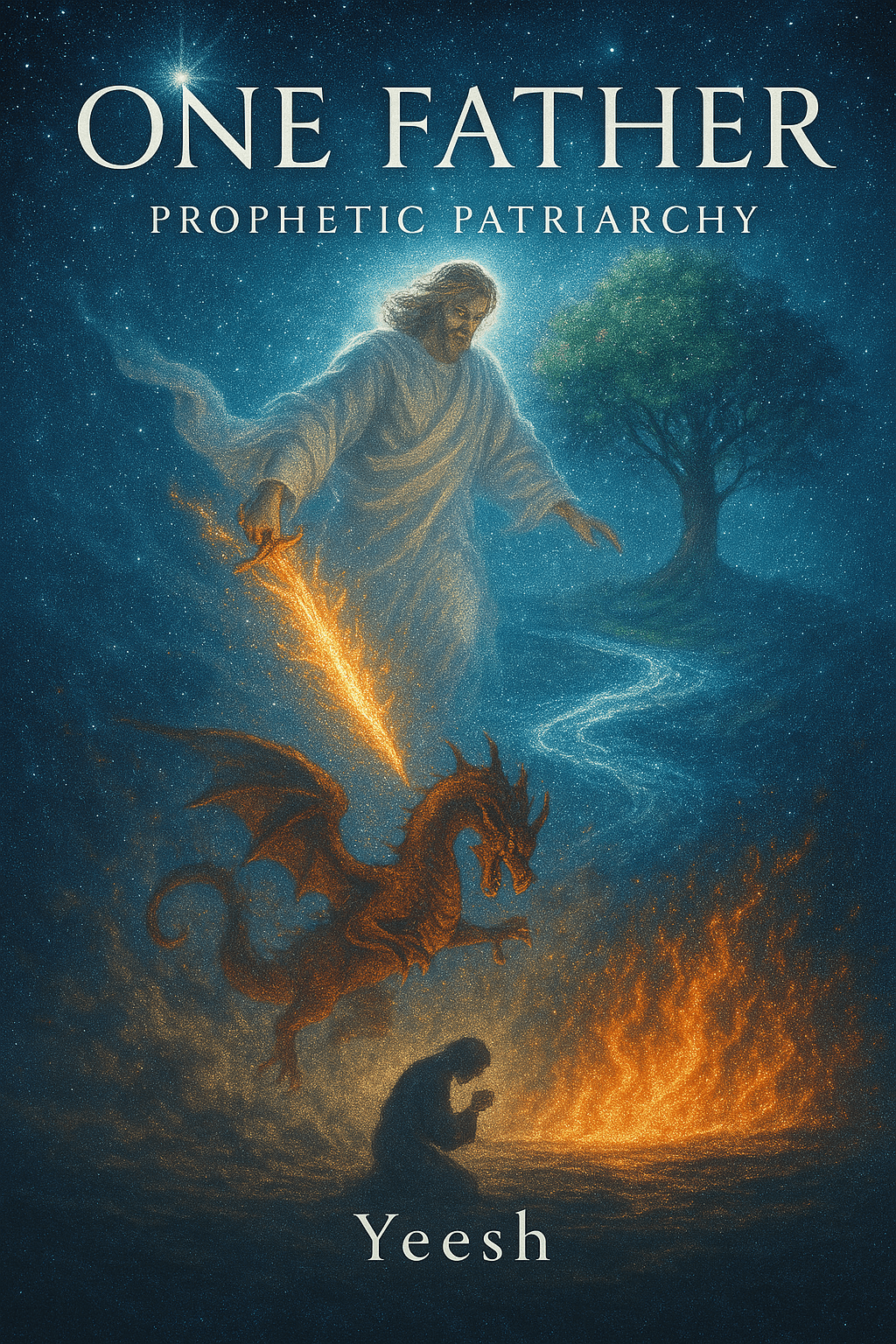
Chapter 11

The One on One

"The Other Side of the garden"

My skin now knows what the tree bark feels like,
rough, like rules I didn’t write,
and yet will still obey.
I know the weight of waiting,
of naming things I cannot keep,
of tilling soil that doesn’t smile back.
But I don’t know how the light feels
when it hits your skin.
What does morning sound like
when it speaks to you?
Do flowers open differently
beneath your steps?
Do rivers hum a sweeter tune
when you draw near?
Or do they ache like I do,
for a voice that sees them?
I speak to God.
But sometimes I wonder
what He said to you
when I wasn’t listening.
Did He explain the ache in my ribs?
Did He tell you how often I watch the wind,
hoping it carries a whisper shaped like your mind?
I don’t need your answer now,
I need your seeing.
I need to know if the garden feels whole
from where you are standing.

Because from here,
it still feels like something’s missing.
And I’m starting to think
it’s not your body,
but your eyes.
Your faith in me.

Hayah basar echad To become one flesh is not the same as being fused, erased, or dissolved. It is not an equation of sameness but a joining that generates something new - a house that did not exist before. The phrase is not poetic garnish. It is architecture. Hayah basar echad -‫ ו ְהָ יּו ְלבָָׂש ר אֶ חָ ד‬-is a foundation-stone in the Temple of meaning. It speaks not only of the union between man and woman, but of the greater pattern: the breath of YHWH entering dust, the covenant that forms order, and the fire that makes flesh holy. This is the prophecy embedded in the garden, echoed in the congregation, and fulfilled in the Bridegroom who walks among the lampstands. This is the resurrection of the Yeesh not merely as husband, but as builder, protector, teacher, and revealer of what it means to hold fast and transform. Hayah (‫ )הָ י ָה‬-to become -is written with Hey-Yod-Hey. Two breaths and one hand. the Spirit above, the Spirit within, and the work between. This is not passive existence as much as it is an initiated transformation. To become in the covenantal sense is to be bracketed by the breath of God and shaped by obedient worship. You may stumble into oneness - but you labor to keep it united as one. You give yourself to it. It is formed in trust, forged in work, and framed in revelation. One breath comes down and one rises up in prayer. The hand in the middle lifts the offering. Basar (‫ )ָּבָׂש ר‬-flesh -is not weakness. It is structure. A house (‫)ב‬, a fire that consumes and transforms (‫)ש‬, and a head (‫)ר‬. This is not indulgence -it is integration. Flesh is the container of purpose. It is the site of dwelling. The vessel of obedience. A home must be built. It must be transformed. And it must be led. Basar is not merely the skin of man and woman but it is the framework of a household led by the Spirit, taught by the man, and made clean by covenant fire.

Echad (‫ ) אֶ חָ ד‬is one but not singularity. It is divine order. It begins with Aleph (‫)א‬, the strong leader, the ox, the head of the house. It moves through Chet (‫)ח‬, the fence that separates life from death, the protected inner chamber. And it opens into Dalet (‫)ד‬, the door - the invitation to movement, the passage through which authority flows. This is not the obliteration of parts but their submission into unity. Echad means that when a man leads rightly, and a woman enters freely, what is formed is a new path, a new name, a new house. Not two separate houses but one united. This is why 1 + 1 = 1. Not because math is broken, but because covenant overrules counting. The Church is one body with many members. Israel was one people with many tribes. The family is one household with many vessels. A man may be joined to more than one wife, and the house still be one - so long as it is led, fenced and defended, and open and inviting in the right order at the right times. To insist that marriage must be two and only two is to deny the very transformation the verse proclaims. It is to say 2 must remain 2. It is to reject the act of becoming. To lock the door against the multiplying Spirit. But the Word says they shall become one. Not remain two. The process is finding unity in the becoming, so reaching a singularity where one individual is eliminated for the sake of the other. If you say it must be limited to two, you say that 2 shall remain 2. You are declaring 2 = 2. But scripture says 2 = 1 over time. And not through fantasy but through fire through trials, good times and bad, richer or poorer, and in sickness and in health, till death do you part. Through a shared vision lead by a strong patriarch, a man of faith, a father of the household. Through mutual reverence and through the sacred offering of flesh made obedient to Spirit. A man with one woman in covenant is one flesh. A man with two women in covenant is still one flesh. Because Echad is not how many, it is how united. Flesh does not divide the house and instead flesh, when ruled by the Spirit, becomes the house. This is why the man is called Yeesh - Aleph-Yod-Shin. Strength (‫)א‬, Work (‫)י‬, and Fire (‫)ש‬. He is not the one without the Spirit, but with it. He is resurrected when he builds what was lost. He is restored when he walks again with the Breath, guarding the garden, protecting the life within, and teaching those who dwell in his gates. The Yeesh is the one who hears the voice of YHWH calling him by name as not just as a husband, but as a householder

and a homebuilder. Not just as a lover, but as a leader. His one-flesh union with his woman is not diminished by strength but instead it is proven by it. And if his strength is great enough to hold more than one woman in covenant without breaking faith, the house does not divide - it deepens in relationship and time, intermingled in covenant and prophetic arc, a beautiful array of children can be born in such circumstances, loved and in community, cherished. “Two shall become one flesh” is not a rule. It is a divine mystery and reality in the Word. And it is solved not by counting, but by covenant. It is a doorway to transformation. To divide what YHWH has joined is to deny Him. To cling to flesh without order is to defile the house. But to open the door, receive the breath, and offer the hand - this is becoming a cherished congregation, one who builds up her household. This is the resurrection of Adam. This is the restoration of headship. This is why households must be strong. Not to resist the world, but to reflect the Father. When a man walks in the Spirit, guards his gates, teaches his women, and holds them in righteousness, the house does not fragment - it shines. This is prophetic patriarchy. This is Yeesh restored. This is not the idol of exclusivity, but the fruit of covenant: one house, one flesh, one name, one glory. A house where breath and bone live in order. A house where love is not a cage but a refining fire and a cooling stream. A house where Echad is not a law - but a life. 2 shall become 1. And the one shall rise.

The 1:1 Intimacy with YHWH Elohim At the deepest level of relationship, beyond every title, role, or covenant, there is the astonishing mystery that YHWH knows you by name, the hairs on your head, and the future He would have for you. Not merely as a group or a people, not as part of a crowd or a collective, but as an individual soul. He formed your inward parts. He numbered your hair. He stores your tears in His bottle. Before your frame was complete, He already wrote your days in

His book (Psalm 139). There is no intermediary who can take your place before Him - no priest, no parent, no spouse. The covenantal invitation is personal, singular, and profoundly romantic in a sense that breaks the very word romance from its worldly confines. Perhaps the only things he doesn’t know, is where you would go if you didn’t choose Him, and what you would find in that lost place. Perhaps he wonders if you would fall and how he would long to pick you up, who and what he would become to be there for you in that broken place. “Where are you?” he calls in the garden of your life. “For your Maker is your Husband, YHWH of hosts is His name…” (Isaiah 54:5) “And I will betroth you to Me forever; I will betroth you in righteousness and in justice, in steadfast love and in mercy. I will betroth you to Me in faithfulness. And you shall know YHWH.” (Hosea 2:19–20) These verses are not metaphors in the cheap sense of the word. They are the language of covenant love. YHWH is not only a Creator or King - He is a Husband, and He desires to be known in the most intimate way. Not merely obeyed. Not merely feared. Known as a beloved knows her bridegroom and he returns that intimacy to her multiplied. This is not a theological abstraction. This is bridal language. It is the holy way of a man with a woman as demonstrated by in the scriptures over and over. She is overflowing with His Love, it cannot be contained in one body. They spill Love wherever they go, they shine bright in glory. The apostle Paul echoes this when he writes, “For I feel a divine jealousy for you, since I betrothed you to one husband, to present you as a pure virgin to Messiah” (2 Corinthians 11:2). The “one husband” here is not a prescription of monogynous law but a cry of devotion, a longing that no other lover - whether idol, man, or self - should come between the soul and her Redeemer. It is a 1:1 connection of the deepest kind and it is easy to bask in it. This is why the second command is like it, to love our brothers and sisters as ourselves, and that is the command that opens the door. The Love was overflowing before, is it not enough now? Why so fallen in countenance? Can’t you see that in the end, we should eat and drink and be

merry, and that we can simply trust there is enough as promised. A household can be a place of community and Love in the Spirit of patience and trust. Love can continue to overflow in all circumstances when we subject the flesh. We must pause here and feel the weight of that kind of love. It is not transactional. It is not clinical. It is not merely moral. It is tender, attentive, jealous, and enduring. He doesn’t just tolerate you but He desires you. In that sacred intimacy, you are fully seen, fully known, and fully loved. No mask, no makeup or facade, no ministry to hide behind. Just you and your Elohim, face to face. This is the original design. This is Eden before the fig leaves. This is the secret place for a man and woman where they aren’t hiding from the Spirit and The Word. And it is echoed in our human longing for one-to-one love for the kind of union where two souls see eye to eye. In this sense, his ways can reflect divine romance. One man and His woman together in THEIR covenant. Their garden. Their shared life. A shared life that can be more, that need not be restricted to be precious. “Therefore a man shall leave his father and mother and hold fast to his wife, and the two shall become one flesh.” (Genesis 2:24) “I am my beloved’s and my beloved is mine.” (Song of Solomon 6:3) “This mystery is profound, and I am saying that it refers to Messiah and the Church.” (Ephesians 5:31–32) There is something breathtaking about this kind of love. A singular glance across a room. A hand held in silence. A shared garden where words are few but hearts are full. When a man and a woman build together with that kind of intimacy, it mirrors something eternal - the kind of covenant YHWH has always offered to His people. The exclusive moments between one man and one woman are holy. Not because they are the only form of love Elohim blesses, but because they whisper of the 1:1 bond we are each invited into with Him. Romance, in its purest form, is not fragile or clingy - it is devoted, trusting, and deeply personal. This kind of love says: “You are mine, and I

will protect and provide for you.” And that is precisely what we all long for with Elohim, really. A relationship in which we are not compared, not replaced, and not overlooked. The sweetness of exclusivity lies not in being the only but in being wholly cherished. And yet... Even this sacred picture can be twisted if we are not careful. For there is a danger hidden in exclusive thinking when identifying with a plural body of Faith: it can become an idol. When we exalt the 1:1 model as the only righteous path, we risk turning a gift into an idol. We begin to believe that intimacy is only real if it is undivided, when in fact, true intimacy is not diminished by multiplicity - it is defined by attentiveness and covenantal love.

When Love Becomes an Idol When something is deeply good, powerfully sacred, and emotionally fulfilling there is always the temptation to enshrine it beyond its place and seek to keep it for oneself. Monogyny, in its purest form, reflects something that is good. It mirrors the soul’s one-on-one intimacy with Elohim, that secret garden where no one else enters. But even the garden can become a gilded cage if we fear what lies beyond its gates. Just because monogyny is deeply good, doesn’t mean there isn’t another option, equally in goodness and expression. This is an ironic place as we argue for the real 1:1 equality be between monogyny and polygyny in categorical goodness, not between a man and a woman in a singular mongogyny-only doctrine. Exclusivity can become a comfort so warm, we resist the wind of the Spirit when it calls us out. The truth is, even the most beautiful loves can become an idol - places where we begin to worship the gift more than the Giver. “Whoever loves father or mother more than Me is not worthy of Me, and whoever loves son or daughter more than Me is not worthy of Me.” (Matthew 10:37) “If anyone comes to Me and does not hate his own father and mother and wife and children… he cannot be My disciple.” (Luke 14:26)

“You shall love YHWH your Elohim with all your heart and with all your soul and with all your might.” (Deuteronomy 6:5) These verses are not attacks on family - they are invitations to reorder love, to place Elohim at the center, and to ensure that every other bond flows from Him, not instead of or in spite of Him. When we elevate exclusivity as the only form of love, we may unintentionally close the door to what the Spirit is revealing. We begin to define morality by emotion, not by scripture. And in doing so, we risk idolatry and spiritual adultery - places of deep devotion that subtly drift into protectionism, fear, and even judgment toward what Elohim Himself has called good.

Polygyny is not a rejection of Love Let us speak tenderly, but truthfully: the ability to love one does not diminish the capacity to love others. This is self-evident to any mother with more than one child. The love for the second does not subtract from the first - it multiplies. The heart expands. So too with fathers, and so too with husbands, when ordered rightly under Elohim’s authority. Polygyny, when lived righteously, is not about discarding intimacy or replacing one love with another. It is about expanding responsibility, deepening sacrifice, and broadening the garden, not uprooting the rose bush already planted. It is entirely possible for a man if called, equipped, and submitted to the Spirit to lead multiple unified households with unity, affection, and honor. Not in chaos, not in lust, not in vanity but in covenant, just as Elohim does. “It was fitting that He… should make the founder of their salvation perfect through suffering. For He who sanctifies and those who are sanctified all have one source. That is why He is not ashamed to call them brothers.” (Hebrews 2:10–11) “Let us rejoice and exult and give Him the glory, for the marriage of the Lamb has come, and His Bride has made herself ready.”

(Revelation 19:7) “I have other sheep that are not of this fold. I must bring them also, and they will listen to My voice. So there will be one flock, one Shepherd.” (John 10:16) These verses reveal the heart of our Elohim. He is a Father of many sons, a Husband of many brides, a Shepherd of many sheep, and yet in all His multiplicity, He loses no intimacy with any one of His beloved.

The Beauty of Both: Holding Love in Balance There is no contradiction between cherishing the singular and embracing the plural. scripture is not demanding an either/or - it invites a both rightly ordered by the Spirit. One-on-one love is beautiful, powerful, and sacred. But it does not close the gates of Eden to the daughters still walking toward the garden any more than then congregation can look at Messiah and tell him the doors are closed. From our inner world, the soul experiences YHWH in a way no one else can. Our walk with Him is intimate, exclusive, and private. He meets us uniquely. He loves us personally. He speaks to us in ways that only we can hear. But from the heavenly perspective, He is One Elohim with many beloved, and His order is not diminished by the multitude but is in fact glorified through it. To cling to one mode of love as the only righteous one is to risk idolatry. It says, “My experience is the limit of what Elohim can do.” But the Spirit is wild and wise and untamed, searching all things, brooding over waters, covering in wings. He may call one woman to a one-on-one bond for life, and another into a family with many sisters, bound together not in competition but in shared love, structure, and fruitfulness. “Woe to you, scribes and Pharisees, hypocrites! For you shut the kingdom of heaven in people’s faces. For you neither enter yourselves nor allow those who would enter to go in.” (Matthew 23:13)

Let us not be gatekeepers of a kingdom whose walls were always meant to expand. Let us not say, “Only this kind of love is holy, ” when Elohim has revealed a wider pattern. And let us never forget: the Elohim who walks among the lampstands, the Shepherd who calls each sheep by name, the Bridegroom who prepares a place for every virgin with oil in her lamp doesn’t forget a single one. Not one. They are all marked in His book of life. And likewise we should not forget them either.

Keeping the Shepherd from Seeking the Lost Sheep “What man of you, having a hundred sheep, if he has lost one of them, does not leave the ninety-nine in the open country, and go after the one that is lost, until he finds it?” (Luke 15:4–7). These are the words of Yeshua, the Good Shepherd who seeks, gathers, and restores. Yet modern monogyny-only theology binds His hands and fences in His mercy. It is as though they cry out, “Let the one who wandered stay lost we’ve already got the ninety-nine in this flock and that is enough.” They take what was meant to illustrate the boundless pursuit of divine love and twist it into an argument for exclusivity and limitation. Yeshua Himself declared, “I have other sheep that are not of this fold. I must bring them also” (John 10:16). But rather than rejoice in the expansion of His flock, the monogyny-bound spirit builds walls where Messiah builds corrals back into the herd. They deny Him the right to shepherd more than one fold, more than one bride, more than one lampstand. If Revelation reveals Him walking among seven golden lampstands - each one a congregation - who among men dares to demand that He must choose only one? In doing so, they align not with the Shepherd, but with the Pharisees, who “tie up heavy burdens, hard to bear, and lay them on people's shoulders” (Matthew 23:4), constructing legalistic boundaries Elohim never commanded, barriers to Love and man utilized in Tilling. These artificial restrictions, cloaked in the language of holiness, are in truth spiritual fences and hindrances to the Shepherd's reach. They echo the murmurs of Jonah, who begrudged the mercy of Elohim to outsiders, forgetting that the heart of YHWH always beats for the return of the

prodigal, the restoration of the scattered, and the multiplication of joy. The Shepherd goes out. The wolf is driven off. The flock expands. And blessed is the house that makes room for all whom He brings in.

Plucking Out the Eye to Hate the Body, Not to Save It Yeshua’s words in Matthew 5:29 are sharp and clear: “If your right eye causes you to sin, tear it out and throw it away.” The aim is surgical - the removal of a corrupting influence for the preservation of the whole. But in the hands of those who idolize artificial singularity, this principle is inverted. They do not remove the sin within themselves and instead constantly they declare the Body itself corrupt. All day long they accuse the brethren of lust, and desire, and sin. Rather than being the eye that examines itself in humility, they rise up as judges and say to the rest of the Body, “I have no need of you” (1 Corinthians 12:21). They do not pluck out their own eye and instead they attempt to gouge out the Body’s sight altogether. In doing so, they become blind themselves. “Whoever hates his brother is in the darkness… the darkness has blinded his eyes” (1 John 2:11). They claim to protect holiness, but their vision is already lost. What they call discernment is often spiritual animosity. What they call purity is, in practice, a rejection of Elohim’s own design as His many-membered Body, His many-branched Vine, His many-bride household. They attack plurality not because it is evil, but because it threatens their idol of uniformity. These are not defenders of the faith but deniers of its fruitfulness. Rather than confessing that their own perceptions may be flawed, they brand others as heretical simply for embracing the structure Elohim has clearly revealed. In truth, they themselves are the eye that causes stumbling and an eye that must be removed of healed by removing the beam so that the Body can see again. The solution is not to hate the Body but to love it rightly, to embrace the unity that preserves distinction and honors the Head who made each part. It is also worth seeing things from another perspective as Yeshua is imminent in all things, after all, there are two eyes in the body and a Spirit that searches all things. This perspective flips us from the sinner pulling out their eye to a prophetic one where the singular gets destroyed for the plural by the body of that sinner. This verse is very profound, because in it we

glimpse not only a call to radical holiness but a profound picture of the Messiah Himself, who is the One who dies for the many. From the sinner’s perspective, this verse seems to demand personal sacrifice, a severing of what leads astray to preserve the whole. Yet, beneath this lies the gospel’s radiant truth: Yeshua, the sinless One, is the true “eye” torn away, bearing the weight of the world’s sin on the cross to save the Body, His Church. “He was wounded for our transgressions…and by His stripes we are healed” (Isaiah 53:5). The One, perfect and singular, is cast out—not for His own sin, but for the many, that “whoever believes in Him should not perish but have eternal life” (John 3:16). Even the high priest Caiaphas, in his blindness, spoke a truth greater than he knew: ‘It is better for you that one man should die for the people, not that the whole nation should perish’ (John 11:50–51). From the sinner’s lips came a prophetic echo of the cross. Messiah, the One, offered up to redeem the many, His sacrifice prefigured in his third day’s rising earth, ensuring the body’s life under His eternal headship. This is the heart of the gospel painted in the sinner’s struggle: Messiah’s sacrifice as the Head ensures the life of the many-membered Body, a prophetic echo of Genesis where one Seed yields a harvest of countless fruits (John 12:24). His death is not to condemn but to redeem, not to scatter but to gather a multitude under His headship.

Preventing Brides from Sharing the Good Husband The gospel does not proclaim exclusivity of access to the Bridegroom - it proclaims His desire to be known, shared, and received by many. “For your Maker is your husband, the Lord of hosts is His name” (Isaiah 54:5). “Return, O faithless children… for I am your husband” (Jeremiah 3:14). These are not whispered to one woman in a garden, but thundered to a nation, to a world. The Good Husband is not territorial; He is redemptive. His house is not a prison for one wife - it is a table set for many brides, each drawn by mercy, clothed in righteousness, and filled with oil. Yet monogyny-only theology slams the door in the face of the bride-to-be. It says to the repentant, “There’s no room left for you.” It says to the broken, “He’s already married.” But Yeshua told a different story. In the Parable of the Ten Virgins (Matthew 25:1–13), the invitation is extended to many. Not all are ready, but all are waiting. The Bridegroom does not come

for one only - He comes for those whose lamps are burning, whose hearts are watching, whose spirits are willing. To insist that Messiah has only one bride is to deny His mercy to the many. It is to force Him into a mold He never endorsed, and to exile those whom He would embrace. But Revelation ends with this cry: “the Spirit and the Bride say, ‘Come.’ And let the one who hears say, ‘Come’” (Revelation 22:17). Who, then, are we to say “Stay away”? Who are we to deny another bride her wedding day? The monogyny-only framework does not protect covenant - it stifles it. It casts Messiah not as the generous Husband who multiplies fruitfulness, but as a sentimental suitor limited to one. But scripture reveals a better Husband One who brings many sons to glory, One who fills a great house with many vessels, One who walks among many lampstands, and one day will return to a wedding filled with voices, oil, and light, and virgins. In the Church today, one of the greatest sources of this sorrow is the insistence that monogyny-only is not just a way, but the only righteous way. What began as a reverence for covenant has, in many places, hardened into a gatekeeping of the Kingdom. “For their heart devises violence, and their lips talk of trouble.” (Proverbs 24:2) “As for a person who stirs up division, after warning him once and then twice, have nothing more to do with him.” (Titus 3:10) “Watch out for those who cause divisions and create obstacles contrary to the doctrine that you have been taught; avoid them.” (Romans 16:17) These are strong words - not for those walking in quiet conviction, but for those who weaponize tradition, creating boundaries that Messiah Himself never drew. We see it so often: verses lifted from their context, hearts stirred with fear rather than love, and a zealous protection of a man-made ideal masquerading as biblical morality. But when we look to Messiah - He, who walks among the

seven lampstands, each one a distinct congregation, each one loved, corrected, and cherished - we do not see a Husband who demands uniformity, but One who calls each bride to faithfulness in her appointed season. Nowhere does Elohim condemn a man for loving more than one wife righteously. Nowhere does He call it sin. Yet men - blind in their legalism build fences around fields that Elohim never enclosed.

No Matter the Perspective - He is One The Body of Messiah, the Family of Elohim, and the Bride of Messiah all follow the same pattern of one singular head over a structured plurality. This plural model fits perfectly into Elohim’s natural order because it mirrors patriarchal patterns at every level. Throughout scripture, Messiah and His ecclesia are described through two complementary metaphors that oscillate between singular unity and structured unified plurality. From the singular unity perspective, Paul describes the Body of Messiah as one entity with many members, emphasizing interconnectedness, unity, and shared purpose (1 Corinthians 12:12–27). Each believer is a distinct part within the body, functioning under the singular Head - Messiah. From the structured plurality perspective, John in Revelation describes Messiah as the Husband walking among multiple lampstands, where each congregation is an individual body under His singular authority (Revelation 1:12–13). Here, the plurality of the Bride is emphasized, much like one Husband having multiple wives. Messiah, as the One Head, remains the singular foundation upon which all other bodies stand. Without Him, all human constructs - whether families, marriages, or congregations - become shifting sand (Matthew 7:24–27). Thus, just as many congregations exist under Messiah’s headship, righteous polygyny mirrors the patriarchal order - where multiple brides exist under the covering of one leader, creating a reflection of Elohim’s structured kingdom.

Would you say that Revelation 3:16 (“Because you are lukewarm, and neither hot nor cold, I will spit you out of my mouth”) is also a threat of a type of prophetic fulfillment of Matthew 5:29, where Yeshua says “If your right eye causes you to sin, tear it out and throw it away”? Is Messiah removing a dysfunctional congregation just as one would remove a death seeking eye from the body? Could this also relate to John 15:2, where Yeshua says, “Every branch in Me that does not bear fruit, He takes away”? If the Church is the vine, and Messiah removes unfruitful branches, is this not the same pattern of cutting off what no longer functions properly within a plural body? Is this what happens in Revelation 2:5, when Messiah warns Ephesus, “I will come to you and remove your lampstand from its place unless you repent”? Is the removal of a lampstand (congregation) from its place the same structured purging of non-functioning parts? Could this also be seen in the Shepherd and Sheep metaphor? “My sheep hear My voice, and I know them, and they follow Me” (John 10:27). Does the Shepherd separating the sheep from the goats (Matthew 25:32) follow this same oscillating pattern of maintaining unity within plurality by removing those who are not aligned with the Head, the goats did not heal the body? Is this why the parable of the wedding banquet in Matthew 22:11–13 depicts a guest being cast out for not wearing the proper wedding garment? Does this mean that not everyone inside the collective body remains there indefinitely, but rather that Messiah, as the singular Head, clothes us in His righteousness. In the sanctification of that he is continually refining His plurality by removing those who do not conform to His order and making them naked and unclothed and missing the wedding. If a congregation can be removed from its place (Revelation 2:5), an eye plucked out (Matthew 5:29), a branch cut off (John 15:2), a goat separated (Matthew 25:32), and an unprepared wedding guest cast out (Matthew 22:11–13) - do all of these reinforce the idea that the biblical model is structured plurality under a singular Head, not an artificial singularity?

Would this then mean that monogyny-only doctrine is a misreading of unity, failing to recognize that the Head governs many, but those many can be sifted and removed when necessary? Does this pattern validate righteous polygyny, since in every biblical relational structure - Body and Members, Husband and Brides, Father and Sons, Shepherd and Sheep, Vine and Branches, Church and Lampstands - we see a structured plurality under a single governing authority? Would this then mean that those who force artificial singularity - whether by rejecting multiple congregations under Messiah, multiple sons under one Father, or multiple wives under a husband - are operating against patriarchal structure rather than in alignment with it? Would you say that the Bible never presents absolute singularity in relationships, but rather oneness achieved through structured plurality, where those who remain faithful are kept, and those who do not are cast out? Would you agree, then, that every time Messiah is presented as the singular, those under Him are always a plurality, and those who misunderstand this concept misapply biblical unity? Would this mean that Messiah alone remains the immovable Rock, while all else is either built upon Him or swept away? Who wants to build the honest biblical argument for monogyny only and send it to be directly? That’s a challenge.

That Love May Be All in All In the beginning, Elohim spoke, and all things were set in motion. Light burst forth into darkness, the heavens stretched out above, and the waters of the deep were gathered to reveal the earth. With each word, creation expanded, multiplying and growing - yet, it was never separate from its source. It was always moving toward something, toward wholeness, toward completion, toward unity.

From the very first moment, the fabric of existence has been in movement toward oneness in Messiah. It is the story of all things coming together, being gathered, formed, divided for a time, then restored to their rightful place. It is a story of expansion and return, of scattering and regathering, of separation and unification. It is the very structure of scripture itself. Paul summarizes this trajectory in an epic cosmic statement: "When all things are subjected to Him, then the Son Himself will also be subjected to Him who put all things in subjection under Him, that Elohim may be all in all." (1 Corinthians 15:28) This is the conclusion of all things - that in the end, all that was divided, all that was fractured, will be brought together in Messiah as a plural body. This theme echoes throughout scripture, beginning with Genesis 1. Before anything could take shape, Elohim divided the waters - separating the heavens from the earth, the seas from the land. On Day 3, the waters gathered into one place, revealing the dry land and preparing the way for life to appear (Genesis 1:9–12). This moment - the emergence of land from water - is the first picture of resurrection, the foreshadowing of all things coming together. Yet, this pattern is not just in creation - it unfolds in humanity itself. Man was formed from the gathered dust of the ground (Genesis 2:7), but when he sinned, he was scattered from the garden (Genesis 3:23). Humanity then multiplied, yet was divided at Babel (Genesis 11:9). Israel was called to be one nation, yet was repeatedly exiled and regathered (Jeremiah 31:10). And the body of Messiah is called to exist in unity of body, yet often torn apart by division and false doctrines (1 Corinthians 1:10–13). But division was never the final plan. The pattern always moves toward gathering, restoration, and unity under Elohim’s order. "That in the dispensation of the fullness of times He might gather together in one all things in Messiah, both which are in heaven and which are on earth - in Him." (Ephesians 1:10)

Everything is expanding now - there are birth pains (Romans 8:22), wars, divisions, struggles - but it is not without purpose. It is a movement toward the final unity in Messiah.

Man, Yeshua, and the Restoration of Mankind Let’s go back to the Third Day Pattern as constantly referencing sources becomes essential. If Genesis 1 is a prophetic structure, then man’s placement on the Third Day with grass, herbs, and seed-bearing life (Genesis 1:11–12) means he is already set within the resurrection framework. Man was created before the garden was planted, before the rain had come down and as the waters were coming up from the ground (Genesis 2:5–8), in a world still waiting for its fullness. Man was prophetically set earlier in the biblical text, having been born in the soil of the third day. In the same way, Yeshua’s resurrection is a return to the original plan, the restoration of what was lost in Adam. Where the man was cast out, Yeshua is brought back in. Where man was divided from Elohim, Yeshua unites Elohim and man. Where man was scattered in death temporal, Yeshua gathers the faithful in Himself on the Third Day into Life Eternal. Through Him, mankind is restored to its intended place - no longer scattered dust, but a unified people in the image of Elohim. "For as in man all die, even so in Messiah shall all be made alive." (1 Corinthians 15:22) If Elohim’s plan is for all things to be one in Messiah, then it is no surprise that the adversary’s strategy is always division. Divide and conquer is the enemy’s game. "He who is not with Me is against Me, and he who does not gather with Me scatters abroad." (Matthew 12:30) The world pushes separation, pushes disunity, pushes brokenness - but Elohim’s plan is restoration.

"There is neither Jew nor Greek, slave nor free, male nor female, for you are all one in Messiah Yeshua." (Galatians 3:28) Everything that has been torn apart will be brought back together. In the end, all division will cease. The Tree of Life will be restored (Revelation 22:2), and the waters of life will flow freely. The third day pattern - death, burial, and resurrection - will reach its final fulfillment as all things are made new in the mystery of his final revelation. The movement of scripture, from Genesis to Revelation, is one continuous theme: the restoration of all things in Messiah. From the scattered waters to the gathered land. From the divided languages to the tongues of Pentecost. From the exiles of Israel to the ingathering of the saints. From the separation of man to the reconciliation of the last Adam. And at last, when all things have been restored, when every enemy is placed under His feet, Messiah Himself will turn all authority back to the Father, and the entire cosmos will be brought into perfect unity circling one infinite and eternal Glory. "Then comes the end, when He hands over the kingdom to Elohim the Father, after He has destroyed all dominion, authority, and power. For He must reign until He has put all His enemies under His feet. The last enemy to be destroyed is death." (1 Corinthians 15:24–26) At that moment, the work is finished, the resurrection is complete, and the division between heaven and earth is removed forever. "When all things are subjected to Him, then the Son Himself will also be subjected to Him who put all things in subjection under Him, that Elohim may be all in all." (1 Corinthians 15:28) This is the purpose of creation. This is the end of the war. This is the resolution of all things. That Yeshua may be all in all and that we may be one in him even as He is one in the Father.