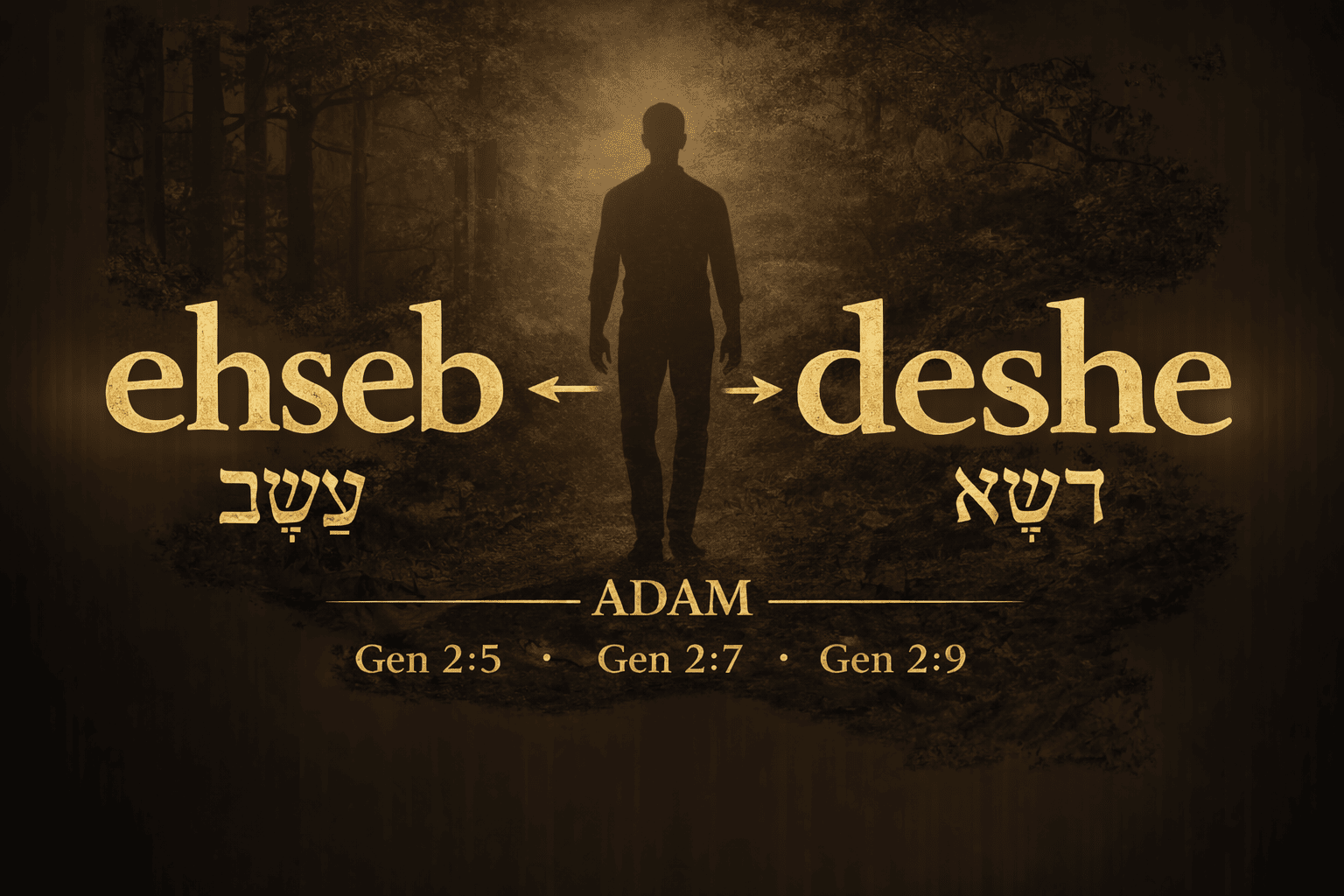
Genesis is not merely chronology—it is covenant architecture: a household ordered before it becomes a nation, and a man shaped before he is asked to bear fruit.
In Genesis 2, Adam is framed in the language of ground and dust, in sequences that echo the dry‑land hinge and the beginning of seed‑bearing life. The pattern is subtle, but consistent: origin in the land, vocation in the land, and (after the fall) judgment returning him to the land.
And the woman is revealed as the corporate body glory of the image—not an appendix, but the moment the pattern becomes visible as “male and female.” The body is whole, but it awaits the Ruach to fill it — for the Spirit is the true finishing glory, the One who fills all things.
When we restore the order, we recover the meaning. And when we recover the meaning, the prophecy sharpens: what is framed in a Third‑Day register points forward to what will be raised on the Third Day.
So the question is not only when—but whether we will read by surface sequence alone, or by the covenant pattern the text is designed to reveal.
Genesis is not two competing stories. It is one covenant pattern — head first, body later — and that pattern is resurrection.