Chapter 06

The Word and The Spirit

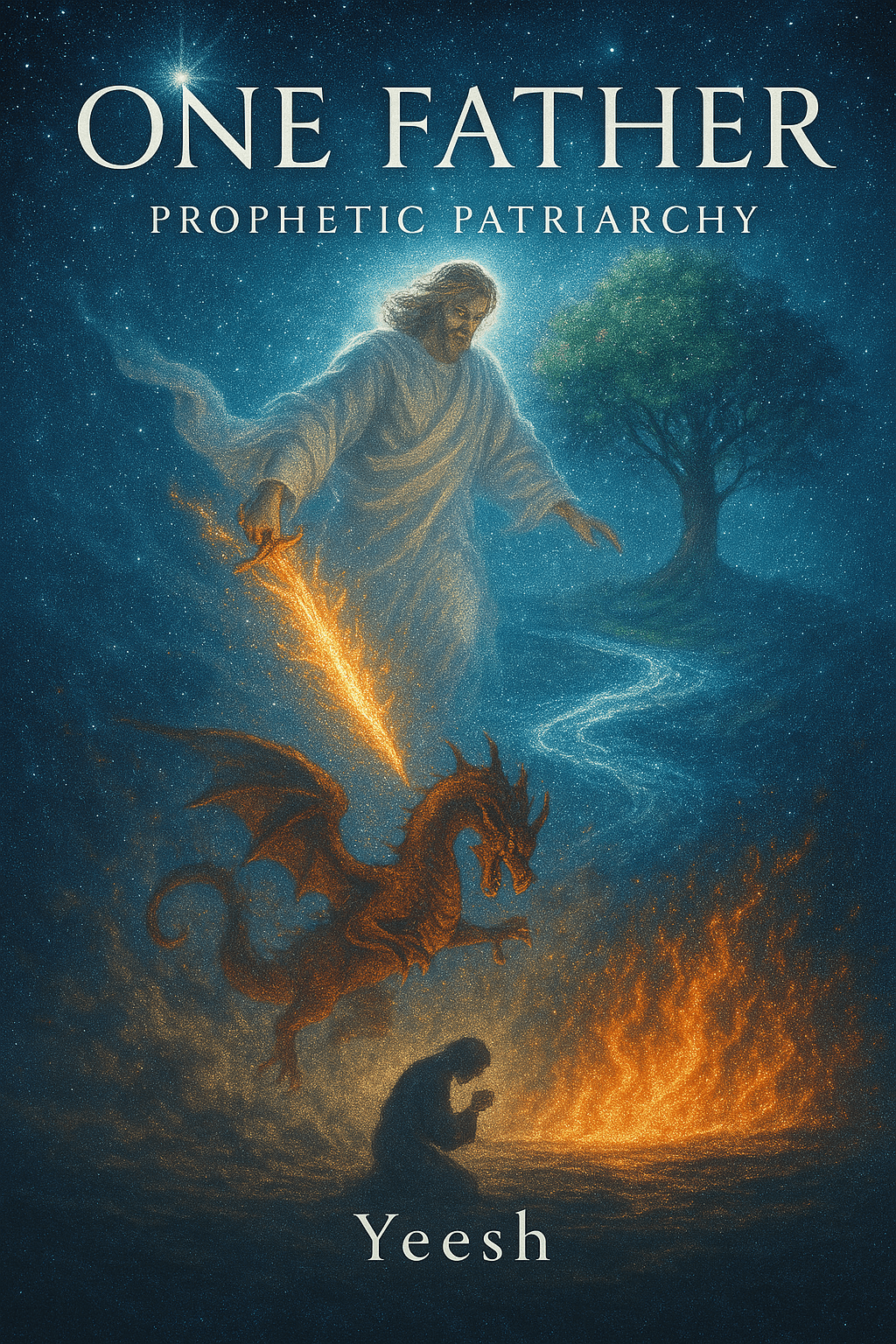
Oh' taunting Dragon, tongue of fire, ever seeking deaths desire, you speak in fractional truths "these broken pasts and present mired, you've fought with all, but now your tired". Hollow and holler are the dragon's gaze and charade. His deceptions draws them in. I, the sleeper, I fell into that deepest sleep, that darkened castle, that open grave beneath the dragons feet. Again, in threat, that great serpent speaks "your past decisions prove defeat, you useless soul, I know you’re weak." In my nightmares, in my sleep. As darkness covers my face, lost in the deep, I the sleeper, sleep. So this is the fruit of the dragon, and this is where we meet? In perpetual dreams with constant displays of such worldly ways. Is this be my fate? To be broken here, what that Dragon eats? Fallen flesh, this warrior sleeps. Only conscious enough to hear the lies from the dragons lyre. No human strength can lift these lids, and break this sleep. Into the darkness, into the bleak. From dust to dust. From man to meat. Is this really my defeat? The sleeper at the Dragon's feet? A cry, a plea! “To God above, I need His strength. In time through light the truth revealed, the glorious Savior who is a graceful Slayer rose.” The Slayer speaks, "Awaken sleeper! and Arise from the among the dead. And I will shine on you." This is the dragon's defeat, as the Slayer's sword is passed to me, the Awoken, at the dragon's feet. I will not tire as I rise! Eyes wide open into the fight, seek altitude for Spirit's eyes. Embracing a broader gaze in a fresh enlightened blaze leads me into the heart of purpose for this blooming Kingdom age. A trust in victory, to the Slayer this day! Hearts alive and mind on fire, feet are swift and straight, protected by a Slayers attire of shield and sword, belt and plate. Into the fire of the dragon's lies, wielding faith a shield, the Slayer's word a sword. The blade that pierces this and that, breaking down the lies from fact. To find truth in all above, below, within, beside, without, unknown, that's been now or ever will be... His word remains to me, forever a Sword in eternity. The Awoken strikes! A fatal blow, when with faith through fear the Awoken shows to whom the triumph goes. This is a battle cry for whom the

glory goes. The Awoken knows that destiny and grace, and that freedom and faith, go hand in hand this day. Here in the present moment, the sovereign strength of the Slayer arises for those whom love him, and trust in his ways. This is the victory of the Awoken, in his weakest moment, in his deepest sleep he was called out by the Slayer to victory. The dragon falls to the sword that day and for the sleeper this was the only way. To be called from death to eternal worth, to rise in truth as he's called forth. The Awoken warrior speaks, "To the Slayer be the Glory this day" as the great dragon falls in display. The serpent now at His feet is slayed.

The True Helper Fit for Man For centuries, the phrase “It is not good that the man should be alone; I will make him a helper fit for him” (Genesis 2:18) has been read as the divine justification for the creation of woman - The first named Eve - as man’s ultimate companion. This interpretation, while foundational to many traditions, often overlooks the deeper spiritual logic of Genesis. It assumes that the woman was the final answer to Adam’s aloneness, when in fact the text never says so directly. No affirmation from YHWH declares her the ezer kenegdo - only Adam’s voice breaks the silence, projecting his need onto the nearest likeness of his flesh. But what if the true Helper was not first the woman, but the Spirit and the Word? What if Genesis 2:18 points not only to marriage, but to divine order an order in which man is to be ruled first by the breath and the voice of Elohim before he ever takes the hand of another? The Hebrew phrase used in Genesis 2:18 is worth a second hearing: ‫עֵ זֶר‬ ‫( ְּכנֶגְּדֹו‬ezer kenegdo). This is no casual phrase. It is surgical and It is precise in what it can reveal to us. The word ezer (‫ )עזר‬is composed of three Hebrew letters: Letter

Ayin Zayin

Hebrew

Sense

‫ע‬ ‫ז‬

The Eye, to see or perceive A weapon or sword

Resh

‫ר‬

The head, the leader

Together they form a composite image of "One who sees, bears a sword, and leads." Ezer is not passive support alone but is also a warrior, an advocate, and a protector. The same word Ezer is used to describe Elohim Himself: “Our help is in the name of YHWH, who made heaven and earth” (Psalm 124:8). Then comes Kenegdo (‫)כנגדו‬, a compound from the root neged (‫)נגד‬, meaning “opposite, ” “corresponding, ” or “in the presence of.” It suggests alignment with distinction - something both like and unlike. Its pictographs tell the tale: Letter

Nun Gimel Dalet

Hebrew

Sense

‫נ‬ ‫ג‬ ‫ד‬

Seed, life, generation Camel, lifting, burden-bearing Door, path, movement

In other words, kenegdo points to one who carries life through the door, a figure who meets man face-to-face, not to deceptively dominate or manipulate for evil purposes, but to move him into fruitful action and faithful direction. So written in more understandable terms the full phrase Ezer Kenegdo, then, means: “One who sees clearly, wars and bears burdens wisely, and leads life through the path of fruitfulness in direct correspondence to man.” This is the role the Spirit of Elohim plays from the very beginning, as testified in scripture. This is a dual part role where the Spirit encourages us to the Word and the Word encourages us in the Spirit. The Spirit testifies to Yeshua in the flesh. the Spirit and the Word have an interaction and relationship with us where they form two parts of a three strand cord with us being the third strand.

We are told in Genesis 3:8 that Adam and the woman heard the sound of YHWH Elohim “walking in the garden in the Spirit of the Day.” Before the woman is formed, before Adam even names her, the Word is already there, moving, speaking, walking, being in the Spirit. The ruach is not an afterthought - it is the breath of YHWH that fills the void of Adam’s solitude as the spiritual Ezer Kenegdo. The woman may have been drawn from Adam’s side, but the Spirit had already been given from Elohim’s own breath. (Genesis 2:7) So then, the Word of YHWH Elohim filled with the Spirit is the original Helper of man. Fully embodying in essence and flesh the Ezer Kenegdo on earth. Yeshua affirms this in the Gospels as well. “And I will ask the Father, and He will give you another Helper (Parakletos), to be with you forever - even the Spirit of truth…” (John 14:16–17) “the Spirit helps us in our weakness…” (Romans 8:26) “Not by might, nor by power, but by My Spirit, saith the YHWH of hosts.” (Zechariah 4:6) The title "Helper" (‫ )עֵ זֶר‬is first and foremost ascribed to the Spirit of God and not the woman. And yet, in much of Christian literature, the term has been almost exclusively assigned to womanhood, as if she were its origin. Many well-meaning books by women explore this identity, drawing beautiful parallels between their nurturing roles and the character of the Holy Spirit. These reflections are often rich with wisdom - so far as they illuminate the Spirit’s gentle power, comfort, and indwelling grace. But herein lies the irony: they treat themselves as the archetype, and the Spirit and Word as the reflection. In truth, it is the reverse. The woman is the reflection of the real thing and the Spirit is the reality. The feminine form is a vessel, a shadow of a greater substance. The Spirit precedes her and surpasses her - in origin, authority, and holiness. For where the woman is 'flesh of my flesh, ' the Spirit is the breath of the Living Word - the very breath of YHWH that hovered over the deep and raised the dust into a son and the dust with blood to an Eternal Son and a Head of the church. This is not a slight against woman, but a call to see her glory as derivative of something higher, something eternal.

If Adam had clung to the Spirit-filled Word as his first and highest Helper, he would not have fallen. But instead, he turned to the reflection of his own form and declared her “bone of my bones, ” and yes “flesh of my flesh” without first seeking more understanding from The Word on whether this was the actual full intended answer to man’s need for companionship and what exactly her role might be in the unraveling narrative. This misplacement of dependence led to a tragic inversion. Adam, governed by affection rather than obedience, followed the voice of the one formed from his side rather than the One who had formed him from the side of His Word. He elevated companionship over conviction - and in doing so, surrendered his righteous dominion and patriarchal headship.

Her Blessed Help This is not to say the woman has no place as ezer - on the contrary, she is a radiant reflection of the Spirit, a vessel through whom the goodness of God’s design is manifested in the earth. For it is written, “The heart of her husband trusts in her, and he will have no lack of gain. She does him good, and not harm, all the days of her life” (Proverbs 31:11–12, ESV). The woman was not made from the dust, but from the man - flesh of his flesh - and in that mystery lies her honor: not as origin, but as glory. “The woman is the glory of man, ” Paul writes (1 Corinthians 11:7), just as man is the image of God. She is not the head, but she crowns the head. She is not the breath, but she animates beautiful dance. She is not the source, but she is fruitful soil and the Spirit, like water, makes her womb like a garden as all the metaphors flow downward. To put it plainly, she is delightful in her feminine form for Adam as we are to Elohim in ours. She is mother of all living (Genesis 3:20), co-laborer in the Great Commission (Romans 16:3), witness to the resurrection (Luke 24:10), and keeper of covenant lineages (2 Timothy 1:5). Even Messiah honored His mother, not with flattery, but with fulfillment, ensuring she was cared for at the Cross: “Woman, behold thy son!” (John 19:26, KJV). Her role, when aligned, is essential and glorious. Yet we must remember this sacred order:

The man was meant to walk first with The Word in the Spirit, then with the woman. The woman was to be led by the man who was led by the Spirit. This is divine order and this is fulfilling prophetic patriarchy. The woman is a helper, yes - but she was never meant to be THE Helper. That title belongs to the Spirit (John 14:26), and that role belongs to THE Word of YHWH who breathed the Spirit. The woman may help in the body, but the Spirit helps in our weakness (Romans 8:26). The woman may nurture in the home, but the Spirit leads into all truth (John 16:13). And if the first man failed to preserve that alignment, then the last Adam would restore it. Yeshua walked with the Spirit from His baptism, wielded the sword of the Word in the wilderness, and entrusted His Bride to the Spirit upon His departure. He fulfilled the pattern: Spirit and Word first, and then the Bride. She is not the pattern but she may carry the pattern. She is also not the root but she may bear some of it’s fruit in her grafting. She is not the Light but she may reflect it like the moon reflects the sun. And this too is a glory for her as the glory of man. For did not the womb of a woman cradle the Word made flesh? Did not a woman break the alabaster and anoint the feet of the King before the cross? Did not women stand watch when the men fled, and become the first to proclaim the resurrection? It is no shame to be the lesser light, for the moon governs the night with borrowed glory and in this, she reveals a mystery. As it is written, “The glory of the woman is the man” (1 Corinthians. 11:7), and “The glory of children are their fathers” (Prov. 17:6). But in her role as crown-bearer, life-bringer, and wisdom-whisperer, she is woven into the very fabric of the blessing. She orbits her source, but has the ability for little ones to orbit her in unison. She brings life in home, nurturing care in time and love.

Proverbs 31:26

“She opens her mouth with wisdom, and the teaching of kindness is on her tongue.”

Proverbs 14:1

“A wise woman builds her house, but with her own hands the foolish one tears hers down.”

She can exist in ezer kenegdo as the mother and helper to the man. And mother (em) in Hebrew is ‫אֵ ם‬: Aleph-Mem, strength and waters. In her, the strong waters of legacy are carried forth. Her obedience magnifies the structure; her faith protects the seed. Her womb nurtures the prophetic echoes through time that would fully bloom into Messiah. But her power flows best when aligned with the wind of the Spirit, for “a prudent wife is from the YHWH” (Prov. 19:14), and “an excellent wife is the crown of her husband” (Prov. 12:4). She multiplies what is given - so what is given must be righteous. If the head is confused, the house will be too. If the Spirit is silenced, her help will become hindered. If her righteous prayers reach the ears of the Father in plea of help from your failed leadership, the answers to your prayers can be withheld. She is a strong balancer with an acute ability to affect the Man she calls husband. Thus the woman, like the earth itself, is blessed when it receives good seed. And in this, she becomes a living parable of the Bride. The one who waits, who watches, who prepares herself for the return of the King. “She makes herself ready” (Rev. 19:7), not by grasping headship, but by perfecting adornment in fruit, humility, obedience, and love. Let her role not be diminished, for she is a house, a garden, and a womb of generations. But let her not be exalted above her station, for she is not the Builder. The Builder is coming. And He is looking for a home built on order, not opinion and not the traditions of men.

A Confluence of Characters “Not so fast, ” as the old saying goes. It would have been good for the Man - indeed, for any man - to slow down and test what he sees in the woman by what he hears from the Spirit and the Word. But too often, men leap into intimacy before laying the foundation of divine order. Excited by

beauty and novelty, they declare, “At last, bone of my bones!” without first discerning whether she walks in step with the Breath that formed them both. And the Enemy knows this. The Serpent, having been passed over in Adam’s search for a true ezer kenegdo (Genesis 2:20), did not accept his rejection silently from his fallen place. No longer vying to be the helper directly, he re-enters the scene by sitting next to the woman - whispering, guiding, imitating a spirit of wisdom and knowledge. And in doing so, he crafts a well disguised parody of the divine pattern. He cannot create. He cannot speak light into darkness. But he can imitate, twist, and reflect just enough truth to be believable and let his darkness in. He speaks with a serpent’s tongue, but poses as a comforter, a revealer of wisdom. “Did Elohim really say…?” (Genesis 3:1). In that moment, the serpent steps into the role of a counterfeit Spirit hovering not in holiness, but at a distance, passing corrupted knowledge through the vessel of a woman. And she, now receiving her counsel not from Adam who is her rightful head - but from the whisper of rebellion, steps into the role of a counterfeit Word made flesh. She will proclaim, with her own mouth, what is “good for food, ” what is “a delight to the eyes, ” and what is “desired to make one wise” (Genesis 3:6), before offering it to the man right after the man announces her as ezer kenegdo and calls her flesh. Perhaps she had already convinced Adam that she was the one to listen to - that her flesh was the thing to heed - though he had once walked with YHWH in the cool of the day. Yet now, she speaks with borrowed breath - a twisted echo of what once was pure. The air of the garden, once untouched, begins to tangle with particles of poisoned insinuation. It is not merely a whisper, but a contagion: a pollutant drifting in the breeze, defiling the same wind where holiness once walked. This is the true “power of the air” - not a prince, but a fallen impostor, grasping for a throne from his cursed positioning. He longs to wear the crown of the metaphor, to rule the currents of thought and speech. But he is a dying serpent, dragging the stench of his death toward the eyes and hands of the man and the woman of Genesis 2.

His craft is insinuation; his strength is inversion. And in time, his accusations will rise like smoke in the courtroom: “In sin you ate - and I was there!”. He insinuates that in sin you ate. Thus he becomes both tempter and tattler, a serpent with two tongues twisting the law, then testifying at its foot. Death enters by deception; the breath of life exchanged for the breath of lies. And now, in prophetic irony, he utters that same accusation not merely as a statement - but as a claim of witness, AS IF he were the Spirit Himself. He mimics the Breath that convicts, but brings no life. He mimics the fire that reveals, but brings no light. He mimics the Word that judges, but bears no truth. His voice is hollow, a counterfeit echo in the court of heaven - yet it is heard, and its reverberations echo thorough time in the conviction of men. This is inversion theology - a reversal of divine structure. Where YHWH The Word should have been the Ezer - the seeing, sword-bearing, discerning Helper (‫ע‬-‫ז‬-‫ר‬- - ). And the Spirit should have bee n the neged - A renewing, bourden-bearing, moving Spirit inside and outside o‫(נ‬s uf us ( - - ). Now the Serpent offers the judgement as wisdom, an d the woman becomes the new voice of this action in Adam s life parading as eq uivalent to the Word of Elohim. Adam eats, and we know he understands what h

1 Timothy 2:14

“Adam was not deceived, but the woman was deceived and became a transgressor.”

Thus the Serpent, who had already been deemed not fit as helper, now pretends to be the one helping the woman help the man. He does not confront Adam head-on, for he knows the structure. He attacks through the one made from Adam, leading her as the new head. And Adam - lacking perhaps full conviction, lacking the sword - follows her voice instead of the Spirit’s.

In doing so, the woman becomes the ezer aligned with a false neged leading through a counterfeit door. And the door she opens is not the gate to fruitfulness, but the entrance to exile in the transient realms of fading flowers and dying grass. This pattern echoes through time: whenever the Spirit is replaced with counterfeit emotion, and the Word is replaced by social relational intuition, the Serpent finds his way back in. Had the Man waited - had he paused to inquire of the true Helper - he would have received wisdom instead of deception. As it is written: “If any of you lacks wisdom, let him ask of Elohim… and it shall be given.” (James 1:5) “Trust in the YHWH with all your heart, and lean not on your own understanding. In all your ways acknowledge Him, and He will direct your paths.” (Proverbs 3:5–6) But Adam did not ask. He did not slow down. He heard no voice from heaven in that moment - only the sound of his own longing echoed through the voice of the woman. This is the tragedy of misplaced help and not understanding the characters involved. The prosecutor's case in court seems solid with him as the witness, Adam’s choice made, and the Woman’s voice echoing through generations. We know now that what will ultimately happen is the Word of YHWH victoriously handles the situation, and the serpent's head will be crushed in the same place his feet sought victory as he tried to overtake the kingdom by force and deception. The strong man stands at the door, and no thief or enemy of the night will take what is defended in Word and in Spirit. There are no weak points, the wall is being rebuilt, the Spirit-filled patriarchs are at the gates, only the faithful enter here.

What Does it Mean To Make a Helper Fit The word translated “make” is asah (‫)עָ ָׂש ה‬, a verb rich in meaning, and used throughout scripture not merely to describe creation from nothing, but also to convey appointment, preparation, and orderly manifestation. In many

cases, asah is used to express Elohim setting something in its role, not forming it out of raw materials. Consider these examples: “This is what you shall do (asah) to consecrate them, that they may serve me as priests.” (Exodus 29:1) “Observe the month of Abib and keep (asah) the Passover to YHWH your Elohim.” (Deuteronomy 16:1) “Jeroboam appointed (asah) a feast on the fifteenth day of the eighth month.” (1 Kings 12:32) In each case, asah means to appoint, to establish, to set in place, or make happen - not to literally bring something into being from nonexistence. The word is deeply tied to function and fittingness, not material formation. This broader usage allows us to reread Genesis 2:18 with more nuance. When YHWH says “I will make(asah) a helper fit for him, ” it is not necessarily a statement of first-time creation. It may instead signal a divine unveiling or appointment as a setting in place of something already present in the design but not yet manifest to Adam. We must remember: the Spirit was already hovering over the waters (Genesis 1:2). The Word was already creating (John 1:1–3). “By the word of YHWH the heavens were made (asah), and by the breath (ruach) of His mouth all their host.” (Psalm 33:6) Here, asah is linked with both The Word and the Spirit, not as things being created, but as instruments through which all things are arranged. Even Isaiah 45:7 provides a balancing act between different similar words: “I form (yatsar) light and create (bara) darkness; I make (asah) well-being and create (bara) calamity…”

Notice how asah relates to peace and order and not necessarily to origination. Therefore, when Elohim says, “I will asah a helper fit for him, ” He may be manifesting a divine order, not starting from scratch. This interpretation allows the Spirit and the Word - the eternally pre-existent expressions of Elohim Himself - to be rightly seen as the first and highest fulfillment of the ezer kenegdo role. The woman, then, is not a contradiction of that role, but a visible, earthly echo of it - a flesh-and-blood image of the spiritual archetype. This aligns perfectly with Yeshua’s language in John 14:16: “And I will ask the Father, and He will give you another Helper, to be with you forever - even the Spirit of truth…” And again in Psalm 54:4: “Behold, Elohim is my helper (ezer); YHWH is the upholder of my life.” the Spirit has always been man’s first Helper, the one who sees (Ayin), wars wisely (Zayin), and leads from the head (Resh). The woman was given to correspond to man, but the Spirit was given to complete him. Adam should have seen her not as source, but as reflection. Instead, he rushed forward before discerning the order YHWH was asah-ing into his life, in pursuit of something else. Thus, asah in Genesis 2:18 is better understood not as Elohim inventing a new solution, but appointing an arrangement - an order of help that begins with the Spirit, flows through the Word, and manifests fruitfully in woman and in life.

The Fall as a Distraction So there Adam was, the woman brought to him and he declares “This is now bone of my bones, and flesh of my flesh” (Genesis 2:10). By following the inclination to assume Adam’s word held the same weight as Elohim’s word to him previously. Then by comingleing the implications of the words

of the serpent into this assumption, we might also fall into the trap of the serpent. Man misunderstood that true help comes through the Spirit breathed Word of YHWH Elohim, not through revelation of flesh and bone. He perhaps forgot that the serpent was already declared not fit, and that any advice originating from him was by implication bad advice. Thus, Genesis 3 through improper inflections and subtle abrogations of responsibility becomes a tragic inversion that leads to the fall. Man should have waited for the Spirit, which was approaching in the cool of the day, and remembered The Word YHWH Elohim had spoken to him already - we know man had whatever existed before his creation since that Word was the foundation for creation to that point in time. Instead, he clung to the deception of the Serpent and the adversarial whispers of HaSatan. And so this became his altar - where he offered up his leadership and followed the flesh. Here he abandoned faith in Elohim’s word, and allowed a false revelation that woman was the exclusive and customized Helper of man to subtly intermingle with the pure water of scripture. Standing opposite to him 1:1, she finds herself in a position of having the full responsibility of ezer kenegdo on her without having been created to fulfill the greater role in that. This is a recipe for disaster as the roles of what would come get greatly confused. This inflection point in scripture attracts the scribes, pharisees, teachers, critics, writers, poets, artists, and every other manner of persons to come and consider what exactly went wrong writing books upon books of eloquent interpretation of its terms. It meets where romance, moral expectation, sexual excitement, future possibility, and terminal potential all coalesce in wondrous display. This is a masterfully told story; why shouldn’t we expect the adversity to be more challenging while the rewards are also greater than we originally imagined? This isn’t just about Man and Woman. It’s about the one Spirit living at peace in both of them and bringing them to unity. However here is the issue, what is the ‘them’ that can be created. They were made in the image of Elohim and Elohim gave the Law. We know the Spirit respects the Law, which directs Love, and therefore cannot be altered on moral grounds - the Spirit can’t be manipulated to change The Law or The Word. If the Spirit and

The Word clearly don’t define a sin in the Law, then we know where there is no Law there is no sin IF the Spirit also abounds in Love. There can be sin in unlove without technically disobeying the law - which is understood as omission. However, opposing sin is not unloving, it is loving. Anything done faithlessly can become sin, but things done in faith can become fruitful. Anything not forbidden by the Law, ought to be able to be done in Faith, but Faith where the Spirit of the Law is expressed in Love. You can’t take the lack of a law as license to do something that undermines the blessing of man given in Genesis 1. the Spirit and The Word cannot be added or taken away from and must always be interpreted in Love. Always keep things in the perspective of the greatest two commandments, to love Elohim and love others, tempered by the first blessings to be fruitful. It also ensures Love can be freely given, and freely received, which amplifies the message of grace. Therefore putting up boundaries that The Word and the Spirit never intended, causes consequence and is therefore not in the Spirit of Love. If the monogyny-only doctrine were not such a problem in the modern congregation, if it had not so directly challenged the authoritative headship structure established by scripture prophetically in patriarchy than I wouldn’t care otherwise, and I have no expectation for how many women can and will be in my life, only that these proper biblical understandings must be respected and protected. It is the repeating pattern of human history in mistaking the visible for the true, choosing flesh over Spirit, the seen over the unseen, and listening to twisted words instead of the clear Word of Elohim and the Spirit-breathed life of YHWH. When we accept man's declaration as evidence that woman was the main answer to man’s being alone, we automatically begin to reinterpret things going forward. We naturally follow the assumption that woman was the outcome of a binding statement of Elohim rather than simply the words of the first man about his new woman he just met, we close the door on the opportunity for more, the greatest of which is the knowledge that The Word and the Spirit are the greatest fulfillment of the ‘ezer kenegdo’.

Then in following that faulty logic he gets us led to the Serpent (‫)נחׁש‬, which is HaSatan (‫)הׂשטן‬, so he did more than commit a single act of disobedience - he set in motion a direct challenge to the Fivefold Blessing that was given. This was his nature from the beginning as Yeshua pointed out, “To kill, steal, and destroy.”. It was a challenge to the authenticity and authority of the Word of Elohim - the binding word that always accomplishes.

Genesis 1:28

“And Elohim blessed them, and Elohim said unto them, Be fruitful (‫)פרו‬, and multiply (‫)רבו‬, and fill the earth (‫)מלאו‬, and subdue it (‫)כבׁשוה‬, and have dominion (‫ )רדה‬over every living thing that moves on the earth.”

Each part of this Fivefold Blessing is a blessed command - a structural reality of creation. When man fell, these blessings were opposed and distorted by the very forces he submitted to.

No Word, No Spirit, No Blessing The fall of man was not merely the loss of innocence - it was the forfeiture of divine alignment. When Adam bypassed the Spirit as his true Helper and received the woman apart from the Word, he created a situation of misrule, and every stream of blessing reversed its flow. In that single fracture, the seed of disorder took root, and its echoes ripple through the scroll of scripture, revealing a profound truth: the woman, in her essence, is not merely Eve but a shadow of plurality - the body, the many. She stands as the counterpart to the man’s singularity, the head, a duality etched into the metaphors of Elohim’s design. When this order inverted, the loss was not just personal but prophetic, a tiny crack that mirrors a congregation body straining to rule its men. A woman metastasized into a corrupt, oppressive institution, lording over the sons of the Elohim. Consider the pattern: Adam, the one, was to lead with the Word and Spirit, his headship a reflection of Yeshua’s singular authority. Eve, the many, was drawn from his side to embody the fruitful body under his care - a bride, a house, a flock (Genesis 2:22). Yet when she spoke apart from the Spirit, and he followed apart from the Word, the head bowed to the body, and the

garden withered. This is the congregation astray, its members grasping at dominion over the Head, inverting the order of 1 Corinthians 11:3: “The head of every man is Messiah.” Worse still, it foreshadows the harlot of Revelation 17, a woman drunk on power, her plurality turned tyrannical, crushing the seed of righteousness beneath her heel. Scripture whispers this principle from Eden to eternity: male singularity anchors, female plurality flourishes - when aligned, they sing of Yeshua and His bride; when misruled, they groan under a curse reversed only by the last Adam’s blood. The blessings of Genesis 1 were designed to flow outward from the Spirit, through the Word, into Adam and then his Woman, and eventually out into the world. Instead, the Serpent severed the flow at the creation of woman, and man joined the fracture rather than subduing the enemy. Let us now trace how each divine command fractured under this inversion:

Be Fruitful (‫→ )ְּפ רּו‬The Curse of Painful Toil Fruitfulness was to be the evidence of divine order - man walking in the Spirit, planted by the rivers of living water, bearing fruit in season (Psalm 1:3). But when Adam forsook the Spirit and took root in flesh alone, fruitfulness became a struggle against thorns. “Cursed is the ground because of you… in pain you shall eat of it all the days of your life.” (Genesis 3:17) “The wages of sin is death.” (Romans 6:23) The pictograph of ‫פ‬-‫ר‬-‫ו‬- - (Peh-Resh-Vav) suggests the mouth of the head securing continuity - fruitfulness as a Word-led continuation of life. When the Word was rejected, the mouth spoke no life, and the ground no l onger yielded joyf

Multiply (‫→ )רְ בּו‬Pain and Division in Multiplication The command to multiply was never just biological - it was generational dominion, the replication of divine image across time. But when the woman

listened to the Serpent instead of the Spirit, her womb became a battlefield of sorrow. “I will greatly multiply your pain in childbearing…” (Genesis 3:16) “Their thoughts were only evil continually.” (Genesis 6:5) The pictograph ‫ר‬-‫ב‬-‫ו‬- - (Resh-Bet-Vav) implies the head of the house sec uring connection - the expansion of a household rooted in divine order. But without the Spirit to guide the house, multiplication became the spre ad of violence and va

Fill the Earth (‫→ )מִ ְלאּו‬Exile and Wandering The Earth was to be filled with glory - every household a light, every nation a reflection of heaven. But instead of being filled with righteous image-bearers, the world was filled with fugitives. “So He drove out the man…” (Genesis 3:24) “Then Cain went away from the presence of YHWH and settled in the land of Nod, east of Eden.” (Genesis 4:16) The root ‫מ‬-‫ל‬-‫א‬- - (Mem-Lamed-Aleph) means to flow from authority t oward strength. This was the call: fill the earth with divine power. But man, detached from authority, became an exile - filling the world with conf usion instead of o

Subdue (‫→ )ִּכבְֻׁש ָה‬A World No Longer Submissive Man was commanded to subdue, not to dominate. He was to bring the Earth under Elohim’s instruction, to harmonize its wildness through righteousness. But after the fall, the Earth resisted. “Thorns and thistles it shall bring forth for you…” (Genesis 3:18) The verb ‫כ‬-‫ב‬-‫ש‬- - (Kaf-Bet-Shin) carries the image of opening the house with fire - the controlled flame of stewardship. But now man burned wi thout

restraint, conquering by fear, not by order. What was meant to be subdu ed in love became adversa

Rule (‫→ )ּורְ דּו‬Dominion Lost to Corruption Man was to rule as a priest-king - ruling with the Spirit, by the Word, not over others, but over creation itself. But when he bent the knee to the Serpent, he handed the scepter away. “All this authority I will give You… for it has been delivered to me.” (Luke 4:6) “Now is the judgment of this world; now shall the prince of this world be cast out.” (John 12:31) The pictograph ‫ר‬-‫ד‬-‫ה‬- - (Resh-Dalet-Heh) suggests the head at the door, revealing. Man was meant to be the revealer of Elohim's will at the ga te of creation. But now another stood at the door - the Accuser - and Adam s role was lost until Messiah reclaime

The Fracture and the Flame The fall was not merely a moral failure. It was a structural betrayal - a misordering of help, a confusion of voices and authority, a departure from proper order and an abdication of headship on the fallen man’s part. When man placed his faith in the woman guided by the serpent, instead of the Spirit and The Word guiding the man, the image shattered, the prophetic victory of Genesis was shrouded, and the man was abolished to work the fields, the realm of serpents and transient reality. Each command of Genesis 1:28 became a curse only because it was severed from the Spirit and the Word. Man still multiplies, still rules, still fills the Earth - but he does so in toil, war, and rebellion because he no longer flows in divine order. But the pattern still stands. And the Sword still guards the Tree of Life willing to refine any who would leave the world for the breath of YHWH.

The only way back is through the Flaming Sword (Genesis 3:24) - which is both refinement called sanctification in Spirit and invitation as Salvation in Yeshua, barrier and path, death to the flesh and life to the Spirit. Only the men who return to the Spirit and the Word can reclaim the blessing and reorder the world as it was meant to be. Without the Spirit, polygyny is just prone to selfish interpretations and chaos. Without The Word, polygyny becomes domination instead of righteous governance, it becomes a perversion of the metaphor of Yeshua and His Bride operating in unison in Love. "For as many as are led by the Spirit of Elohim, they are the sons of Elohim." (Romans 8:14) A man who has multiple wives but lacks the Spirit will be ruled by his flesh, create a house of idolatry no matter how many women he has, and ultimately will fail to turn it into a multigenerational legacy in the Spirit of Elohim and the continuance in The Word of Elohim. Eventually, whether in his generation or the next, the family will fall apart without the blessing of Elohim. That’s not to say Elohim can’t have mercy and create a redemptive arc in that man’s life, but it is to say he would be neglecting a core part of his responsibility as a man and would therefore be taking unwise and foolish risks. It is better to work with the Spirit than against Him. A Spirit Led patriarch however will maintain righteous order in His home. Lead his household in truth, preventing division, leading to Yeshua. He will mirror Messiah’s governance over His home (the congregations). "Man shall not live by bread alone, but by every word that proceeds from the mouth of Elohim." (Matthew 4:4) The Word provides structure - a patriarch must follow The Word’s principles on marriage, treat all wives with fairness and justice (Exodus 21:10) and certainly raise up offspring that seek The Word, not just produce children aimlessly. Without The Word, polygyny becomes destructive but when ruled by the Spirit and The Word, it restores the edenic structure that man failed to uphold. Man’s mistake was in relying solely on one woman’s understanding,

allowing himself to be drawn into the serpent’s deception. This same pattern plagues modern men who give their entire emotional and spiritual allegiance to one woman rather than to the Spirit and The Word. They see their wife’s perspective as their primary revelation rather than testing it against patriarchal truth. Thus they allow cultural norms to dictate morality rather than relying on biblical structure. They sit and listen in the pews while the bible sits at home collecting dust. Patriarchal polygyny reverses this error by preventing one woman’s emotions from dictating the household’s direction; forcing a man to rely on wisdom from The Word and the Spirit rather than a singular female perspective. This ensures that a man governs, rather than being governed by his household. In this way, polygyny is not just an alternative marriage model but it is a prophetic act that restores edenic structure, ensuring that men do not repeat man's failure and that two great forms of marriage (monogyny and polygyny) are held in equal esteem against the enemy of monogyny-only doctrine.

Know Word, Know Spirit, Know Blessing the Spirit as our Helper (John 14:16) The Word as our Foundation (John 1:1, Matthew 7:24–27) The Bride as the redeemed Church (Revelation 19:7–9) This deeper understanding of Genesis 2:18 does not diminish the role of women but clarifies that both men and women must first be led by the Spirit. Only then can relationships, marriages, and the world itself be truly restored. Understanding the Spirit as our primary Helper is not just theological - it is deeply practical. If we seek Him first, all other things, including relationships, will fall into place (Matthew 6:33). Let us learn from man's mistake and embrace the Spirit as the guide, protector, and refiner He was always meant to be. "He who has an ear, let him hear what the Spirit says to the congregations." (Revelation 2:7) If we, as men, walk in order, we will not trip where the Man tripped. Instead, we will restore the original structure of Eden, ensuring that the Spirit and The Word remain our guiding force.

Eve, whose name in Hebrew (‫ ) אִ ָּׁש ה‬carries the meaning of “strong leader who devours wisdom and reveals something new, ” was deceived into accepting the Serpent’s alternative revelation rather than waiting on Elohim. The Serpent (‫)נָחָ ׁש‬, whose name pictographically means “seed that brings division and devours”, offered false wisdom, separating man from YHWH Elohim and leading to humanity’s fall. Man, whose name (‫ ) ָאדָ ם‬signifies “the strong leader who must choose a path between life and chaos”, made the fatal error of choosing the wrong ezer kenegdo - following the human and idolatrous rather than the divine and leading mankind into chaos. This moment was the first great inversion of Elohim’s order, where the true helper, the Spirit and The Word, was replaced by a mixture of human reasoning, misunderstanding, and subtle deception. This pattern has repeated throughout history, where men abandon leadership in favor of cultural, emotional, or deceptive influences. Yet, the true restoration comes when man reclaims the right order - submitting to the Spirit and The Word first, and then properly leading his household. This foundational truth reveals why monogyny-only doctrine, feminism, and the rejection of patriarchy are all modern echoes of the original deception in Eden.

Genesis 1: Man - Created With Purpose After receiving the woman, the Man becomes Yeesh (husband) but still lacks a full understanding of his environment and the nature of himself and his ezer kenegdo. The text shifts from "man" (adam) to "husband" (yeesh) marks his transition into a covenant with the woman, but he does so without clear evidence that he has discerned the correct nature of his ezer kenegdo. The plot flows into its natural order of assumptions, but is spiritually and prophetically hidden and incomplete. At this point in time the man represents the image bearer of Elohim, YHWH is The Word and the Spirit is His breath, and the woman represents the bride. The serpent represents adversity to the blessing, and the man as husband (Yeesh) represents the Man in his married state reflecting the Messiah and the Bride post salvation, after the renewal of all things - this creates a powerful parallel between Genesis 1-3 and the Gospels through Revelation. When viewed through this lens, the flow of events in Genesis foreshadows the gospel narrative through to the fulfillment of the prophecies

of the end, with deep implications about the role of Yeshua, the Church, adversity, and redemption and our roles as men and women as husbands and wives. In Genesis 1:26–28, mankind as a whole is created in Elohim’s image and given the Five-Fold Blessing - to be fruitful, multiply, fill the earth, subdue it, and rule over it. However, this mirrors humanity before the fall - created for greatness, yet without fully realizing the necessity of dependence on the Spirit and The Word which was to be fully revealed in time. Mankind would need to understand that all of creation was founded on the Word of God, who is Yeshua. So YHWH Elohim would be behind the setup of the prophetic framework for this to be revealed in the story as it unfolds in the scriptures. He would cause it to come to pass so to say through His own presence in the birth of Yeshua AND His presence in the garden with Adam as YHWH Elohim.

Genesis 3: The Deception and the Fall The Serpent (Adversity) seeks to involve himself with the man through the woman and subtle insinuations and inflections. The Serpent (adversity, deception, false wisdom) targets the woman first, just as the pharisees and false teachers corrupt the faith of the congregation, leading many astray, and to this day the congregation will still hold to tradition over The Word. Are we surprised many feel and behave devoid of the Spirit? The Serpent questions Elohim's Word, just as satan questions Yeshua in the wilderness (Matthew 4:1–11). The woman listens, just as Israel struggles with false teachings throughout the Old Testament and New Testament and the congregation struggles with them today. Man follows the woman without seeking YHWH (Yeshua’s) Word and The Man eats from the tree without resisting, just as Israel follows false shepherds and the congregation clings to its traditions over the Torah. Man, as Yeesh, now steps fully into the consequences of doubting the word of YHWH and trusting the seen (woman) rather than waiting for the unseen and promised in the Spirit of the Word of YHWH. This mirrors Israel rejecting Yeshua and following the religious traditions of men (Mark 7:6–9). Yeshua, in contrast,

does not fall for the same deception when tempted in the wilderness. He uses The Word as a sword.

The Gospel Parallels: The last Adam (Yeshua) and the Restoration Where man failed, Yeshua succeeded. Faced with the complexity of balancing the Word of YHWH against other words, the first man misplaced his trust - choosing false wisdom and knowledge over the truth he had received. He did so knowingly, perhaps doubting the nature or sufficiency of the Word itself. In contrast, Yeshua, when confronted with the misuse of scripture (Matthew 4:1–11), wielded it like a sword - immediately countering subtle insinuations with authoritative declarations drawn directly from the Word. Man was offered food (fruit), wisdom (power), and protection (not dying immediately) - just as Yeshua was tempted with bread, kingdoms, and angelic rescue. The first man accepted the false offer; the Last Adam rejected it. Genesis 1–3 is not merely the origin story of mankind - it is a prophetic foreshadowing of the gospel, of Israel, of the Church, and of Yeshua’s victory. Man, now the lost son - the sinner - is called into covenant, yet continually stumbles by trusting what is seen, rather than returning to the Spirit of the Word of YHWH. The woman, as the gathered congregation, begins in deception, but is ultimately redeemed through her true Husband Yeshua. The serpent, representing adversity, continues to twist words in an effort to corrupt, but his power is being steadily undone. The Word of YHWH Elohim - manifest in Yeshua - steps once more into the garden as Salvation Himself, preeminent and eternal. On the third day, He raises the new man to life - Yeshua, the head - and with Him, His congregation, His bride. To me, this is a beautiful picture of potential household salvation, and a powerful calling: that patriarchal headship is not mere authority, but a prophetic invitation to become a covering for those we love and to cast that cover in the Spirit of intercession as far as it will go. That covering is our

credibility in Yeshua through faith. We pursue him today to cover them tomorrow. Seen through this lens, Genesis becomes a gospel in seed form beginning in a garden, contended for in the wilderness, redeemed on a cross, and restored in a coming Kingdom. the Spirit and the Word have always been the true Helper fit for man - the ultimate Ezer Kenegdo. And those who place their faith in the Spirit of the Word of YHWH Elohim will surely find help.