Opening Thought
The Sadducees came to Yeshua with what they thought was an impossible question. They did not believe in the resurrection, so they built a resurrection puzzle around marriage: seven brothers, one woman, and a levirate-law scenario meant to make resurrection look absurd.
Their question was simple: in the resurrection, whose wife will she be?
But Yeshua’s answer was much bigger than marriage. He did not merely say, “You misunderstand marriage after death.” He said they were wrong because they did not know the Scriptures or the power of God.
“Do ye not therefore err, because ye know not the scriptures, neither the power of God?”
Mark 12:24
That sentence changes the whole passage. Their error was not only about a woman and seven men. Their error was about resurrection, Scripture, God’s power, and who should be considered “dead” in the first place.
Not the God of the Dead
After correcting their misunderstanding about resurrection life, Yeshua anchors His answer in Moses:
“And as touching the dead, that they rise: have ye not read in the book of Moses, how in the bush God spake unto him, saying, I am the God of Abraham, and the God of Isaac, and the God of Jacob? He is not the God of the dead, but the God of the living: ye therefore do greatly err.”
Mark 12:26–27
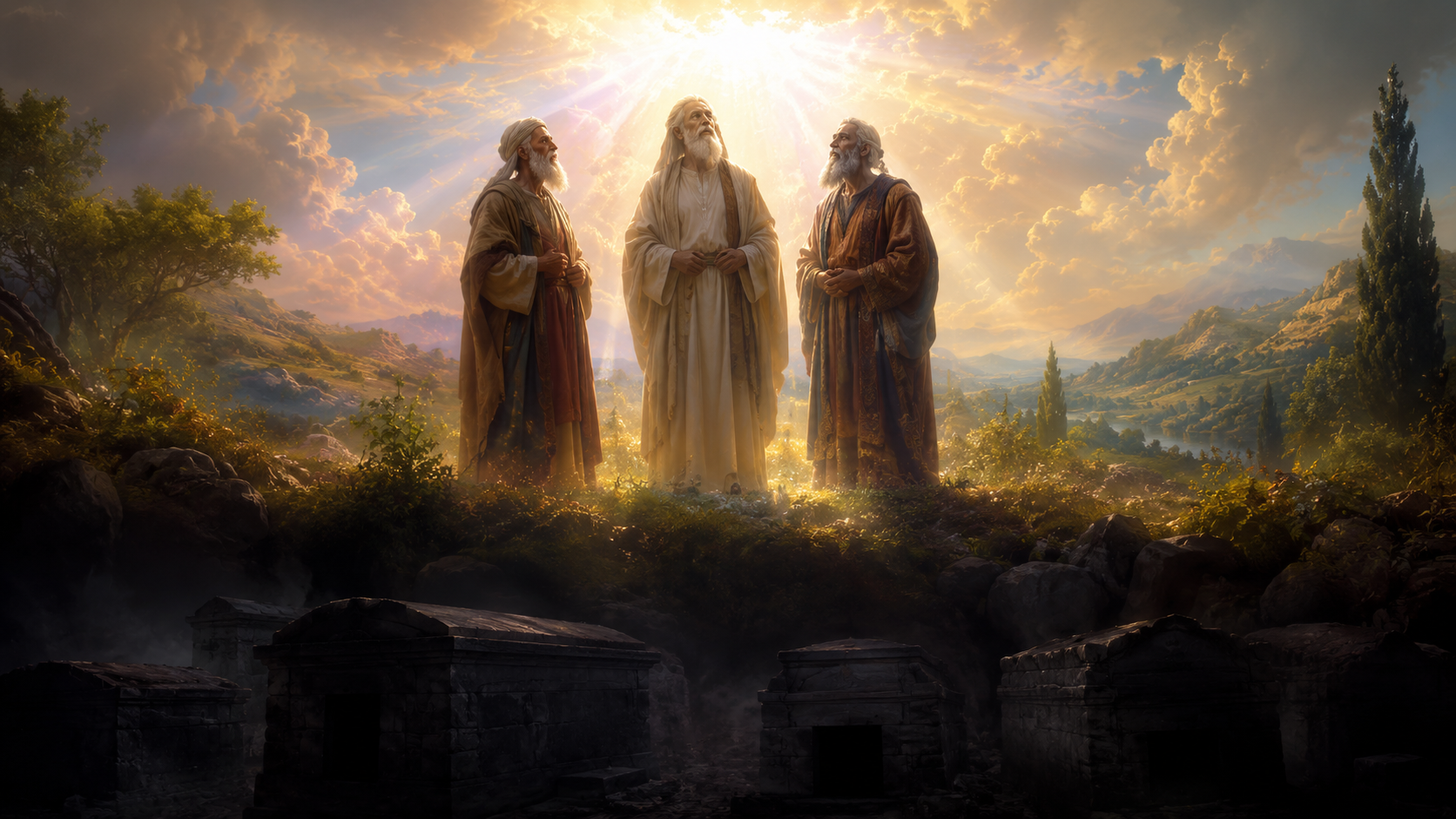
This is the center of the passage: God is not the God of the dead, but of the living.
By normal human categories, Abraham died. Isaac died. Jacob died. Their bodies returned to the dust. Yet Yeshua refuses to let the Sadducees define them merely as dead. Why? Because they belong to the living God.
That means Scripture can speak of physical death, sleep, burial, or waiting, while still treating the covenant faithful as alive to God. The faithful may physically sleep, but they are not “the dead” in the same covenantal sense as those who later stand before the throne in judgment.
This is why Mark 12 matters so much. Yeshua’s answer is not simply a prooftext about marriage ending. It is a resurrection framework. He is dividing the living from the dead in a way the Sadducees completely missed.
Those Counted Worthy
Luke’s account gives even more detail:
“The children of this world marry, and are given in marriage: but they which shall be accounted worthy to obtain that world, and the resurrection from the dead, neither marry, nor are given in marriage: neither can they die any more: for they are equal unto the angels; and are the children of God, being the children of the resurrection.”
Luke 20:34–36
Yeshua does not say, “Everyone who dies automatically enters this condition.” He says those accounted worthy obtain that age and the resurrection from the dead. They cannot die anymore. They are children of God. They are children of the resurrection.
That language is selective. It is not a flattened statement about every human being after death. It is about a qualified group: the worthy, the sons of God, the resurrection children, the ones over whom death no longer has power.
This sounds very close to Revelation 20.
First Resurrection Versus Second Death
Revelation 20 gives the clearest resurrection sequence in Scripture:
“And they lived and reigned with Christ a thousand years. But the rest of the dead lived not again until the thousand years were finished. This is the first resurrection. Blessed and holy is he that hath part in the first resurrection: on such the second death hath no power, but they shall be priests of God and of Christ, and shall reign with him a thousand years.”
Revelation 20:4–6
Notice the contrast. Revelation does not frame the issue as first resurrection versus second resurrection. It frames the issue as first resurrection versus second death.
That distinction matters.
Resurrection is something each person experiences once. But death is different. Some die once. Some never die. Some die twice. The terrifying numbered thing in Revelation is not a second resurrection. It is the second death.
That means “first resurrection” may be bigger than a simplistic timeline label. It is the blessed resurrection category: the transition into life before God, over which the second death has no power. The saints have part in it first, at the beginning of the thousand-year reign. But the contrast is still not “resurrection one” against “resurrection two.” The contrast is life secured against death repeated.
The Saints Are Not Merely “The Dead”
This is where Mark 12 becomes essential. If God is not the God of the dead but of the living, then the faithful are not typified merely as “the dead” in the same way the later judgment group is.
Paul can speak of “the dead in Christ” rising first, because physically they have died:
“For the Lord himself shall descend from heaven with a shout... and the dead in Christ shall rise first.”
1 Thessalonians 4:16
But covenantally, they are alive to God. They belong to the Living One. They are saints. They are blessed. They are holy. They are counted worthy. They are not awaiting an uncertain verdict as ordinary dead men.
By contrast, Revelation 20 says:
“But the rest of the dead lived not again until the thousand years were finished.”
Revelation 20:5
The text does not call them “the rest of the saints.” It calls them the rest of the dead.
That does not automatically mean every one of them is condemned. But it does mean they are not the same group as the blessed and holy saints reigning with Messiah.
Kingdom Inheritance and Final Life
This gives us a better way to distinguish the resurrection rewards.
The first reward is Kingdom inheritance. The saints are raised or changed at Messiah’s coming. They reign with Him for a thousand years. They are priests. They are rulers. They are overcomers. They are entrusted with law, order, judgment, and government on earth.
“To him that overcometh will I grant to sit with me in my throne.”
Revelation 3:21
“He that overcometh, and keepeth my works unto the end, to him will I give power over the nations.”
Revelation 2:26
“If we suffer, we shall also reign with him.”
2 Timothy 2:12
This is not generic salvation language. This is Kingdom inheritance language. The Kingdom is not merely about escaping death. It is about being trusted to govern under Messiah.
The second reward horizon is final life in the new creation. After the thousand years, the dead are raised. The books are opened. The book of life is opened. Then comes the final sorting.
The saints receive both rewards. They inherit the Kingdom first, and they also share in the final new creation. But Scripture leaves room for another group: people raised after the thousand years who are judged and found in the book of life, receiving final life without having inherited the millennial reign.
The Book of Life at the Great White Throne
After the thousand years, John sees the dead stand before God:
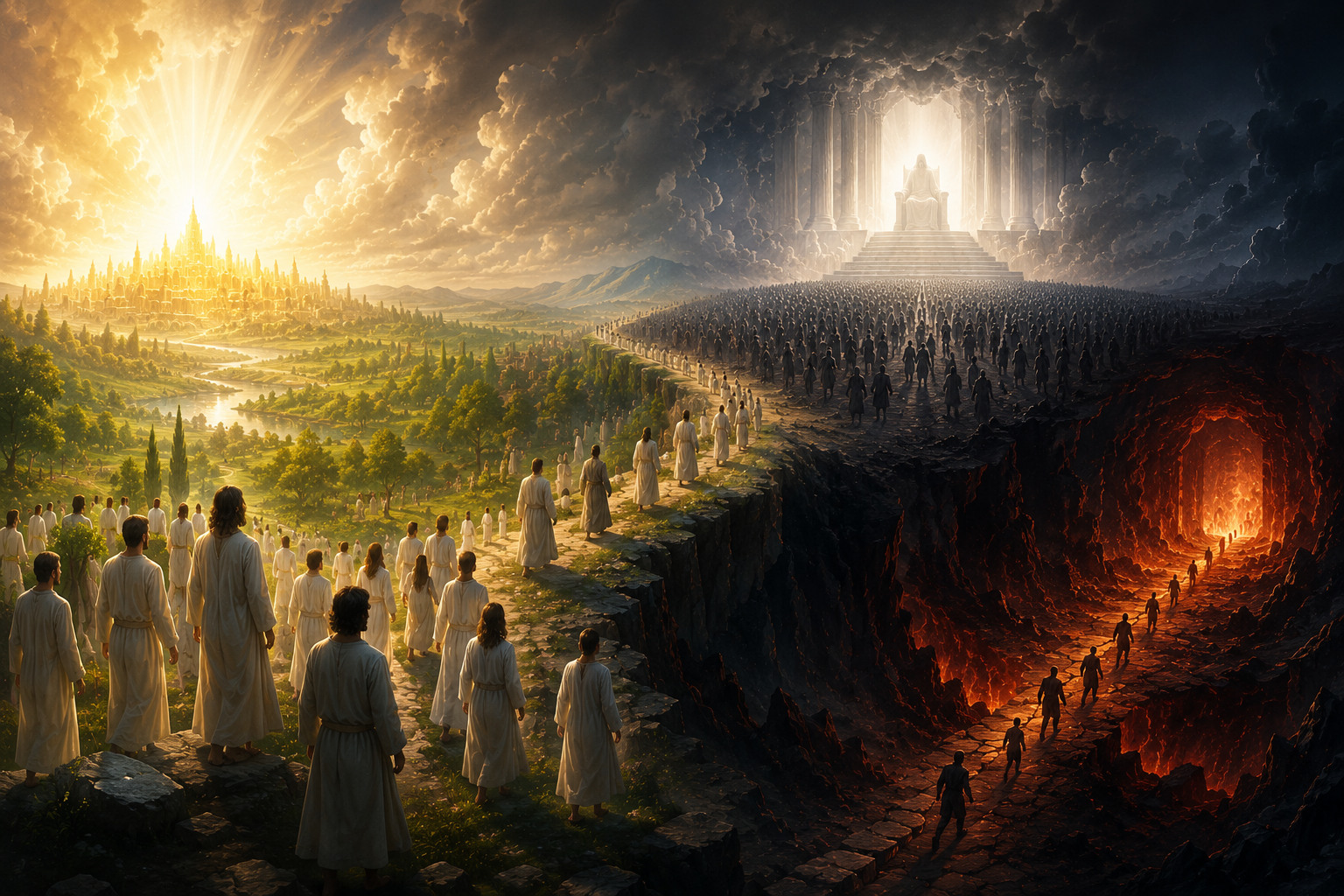
“And I saw the dead, small and great, stand before God; and the books were opened: and another book was opened, which is the book of life.”
Revelation 20:12
Then the text says:
“And whosoever was not found written in the book of life was cast into the lake of fire.”
Revelation 20:15
It does not say, “Everyone standing there was cast into the lake of fire.” It says whoever was not found in the book of life was cast into the lake of fire.
That means the Great White Throne is a real judgment scene. Books are opened. The book of life is opened. The dead are judged. Some are condemned to the second death. But the text leaves room for life.
This fits Daniel:
“And many of them that sleep in the dust of the earth shall awake, some to everlasting life, and some to shame and everlasting contempt.”
Daniel 12:2
And it fits Yeshua’s words in John:
“The hour is coming, in the which all that are in the graves shall hear his voice, and shall come forth; they that have done good, unto the resurrection of life; and they that have done evil, unto the resurrection of damnation.”
John 5:28–29
There is resurrection unto life. There is resurrection unto judgment. There is final condemnation. But Scripture does not require us to flatten the later resurrection into automatic damnation.
Faith, Faithfulness, and the Law-Order of the Kingdom
This distinction helps reconcile two biblical truths that are often collapsed.
First, life comes through faith in Messiah:
“He that heareth my word, and believeth on him that sent me, hath everlasting life, and shall not come into condemnation; but is passed from death unto life.”
John 5:24
Second, Kingdom inheritance is repeatedly tied to obedience, endurance, faithfulness, and overcoming:
“Not every one that saith unto me, Lord, Lord, shall enter into the kingdom of heaven; but he that doeth the will of my Father.”
Matthew 7:21
“Here is the patience of the saints: here are they that keep the commandments of God, and the faith of Jesus.”
Revelation 14:12
So the distinction may be stated this way:
Faith gives life. Faithfulness inherits the Kingdom.
Or:
The Kingdom is entrusted to the worthy. Final life is granted to those found in the book of life.
This does not mean law-keeping earns salvation. It means the millennial Kingdom is a reward of rule, order, priesthood, and inheritance. It belongs to overcomers who keep the commandments of God and the faith of Yeshua. The Kingdom is heaven’s order manifested on earth.
There may be people who truly belong to Christ, whose names are in the book of life, but who were not Kingdom-ready. They had genuine faith, but did not become law-ordered, obedient, overcoming saints fit to reign with Messiah during the thousand years. They receive life after judgment, but they do not receive the millennial Kingdom inheritance.
The saints receive both. They inherit the Kingdom first, then pass onward into the final new creation.
Three Groups in the Resurrection Framework
This creates a three-category framework:
1. The Saints, the Worthy, the Overcomers
These are the living in the strongest covenantal sense. They are physically raised or changed at Messiah’s coming. They are counted worthy. They keep the commandments of God and the faith of Yeshua. They reign with Messiah for a thousand years. They receive the Kingdom inheritance and then also enter the final new creation.
2. The Dead Raised to Life After the Thousand Years
These are among “the rest of the dead.” They are raised after the thousand years and stand before the Great White Throne. The books are opened. The book of life is opened. Some may be found in the book of life. They did not inherit the millennial Kingdom reign, but they receive final life in the new heaven and new earth.
3. The Goats, the Condemned, the Second-Death Group
These are those not found in the book of life. They are cast into the lake of fire. This is the terrifying category. Not late resurrection. Not judgment itself. The true catastrophe is the second death.
Every Man in His Own Order
Paul gives us the resurrection order in 1 Corinthians 15:
“But every man in his own order: Christ the firstfruits; afterward they that are Christ’s at his coming. Then cometh the end, when he shall have delivered up the kingdom to God, even the Father.”
1 Corinthians 15:23–24
Then Paul says:
“For he must reign, till he hath put all enemies under his feet. The last enemy that shall be destroyed is death.”
1 Corinthians 15:25–26
That sequence is powerful:
- Messiah rises first.
- Those who are His rise at His coming.
- He reigns.
- Then comes the end.
- Death is finally destroyed.
That matches Revelation 20 and 21. The thousand-year Kingdom is not the final new creation. It is Messiah’s reign until every enemy is subdued. Then death itself is destroyed. Then comes the new heaven and new earth.
The Power of God
The Sadducees were wrong because they did not know the power of God.
They thought resurrection created contradictions. Yeshua says resurrection reveals the living God.
God is able to preserve Abraham, Isaac, and Jacob as living to Him. God is able to raise the worthy into a deathless Kingdom condition. God is able to reign through the saints for a thousand years. God is able to raise the rest of the dead after the thousand years. God is able to open the book of life. God is able to judge rightly. God is able to destroy death itself.
The Sadducees’ mistake was not merely that they denied resurrection. Their deeper mistake was that they let death define the categories. Yeshua does not.
He begins with the living God.
Conclusion: He Is the God of the Living
The Sadducees asked whose wife the woman would be.
Yeshua answered with resurrection, worthiness, Scripture, power, and the living God.
That means Mark 12 is not a small marriage prooftext. It is a resurrection framework.
The saints are counted worthy and raised to reign. The rest of the dead are raised after the thousand years for judgment. Some are found in life. Some enter the second death. The saints inherit the Kingdom and then share in the final new creation.
The biblical contrast is not first resurrection versus second resurrection. It is first resurrection versus second death.
Resurrection is the once-for-all movement into embodied life before God. Death is the thing that can repeat.
And this is why Yeshua’s words matter so much:
“He is not the God of the dead, but the God of the living: ye therefore do greatly err.”
Mark 12:27
The hope of Scripture is not merely that dead people come back. The hope is that God’s people belong to the Living One.
For He is not the God of the dead, but of the living.
And when the living God finishes His work, death itself will die.